You’re slightly winded climbing a flight of stairs. Your ankles feel puffier than usual. You chalk it up to age, stress, or too much salt. Then, during a routine checkup, your doctor pauses while listening to your chest and says those words: “Your heart valve isn’t working properly.”
Your mind races, but not to medical terminology. It races to one very human question:
“Do I really need surgery? Or can I just take a pill for this?”
It’s one of the most common questions cardiologists hear, and it deserves a real, honest answer. Not a dismissal. Not medical jargon. Just the truth about what medications can do, what they can’t do, and what it means for your life going forward.
What Does a Heart Valve Problem Actually Feel Like?
This is where it gets tricky because the answer is often nothing. At least, not at first.
Heart valve disease is one of medicine’s great silent threats. The valve can be significantly damaged before the body, and the person living in it sends up any red flags.
When symptoms do appear, they tend to be subtle and easy to dismiss:
- Fatigue that seems out of proportion to your activity
- Shortness of breath, especially when lying flat or during exertion
- A racing, fluttering, or irregular heartbeat (palpitations)
- Swollen feet or ankles, especially at the end of the day
- Dizziness or lightheadedness
- Chest discomfort or a feeling of pressure
Your heart has four valves: the mitral, aortic, tricuspid, and pulmonary, and each acts like a one-way door, keeping blood flowing in the right direction at the right time. When one of those doors doesn’t open wide enough (a condition called stenosis) or doesn’t close properly and lets blood leak back (called regurgitation), your heart has to work harder to compensate. Over time, that extra strain takes a toll.
Some people carry a valve problem for years without knowing it. Others feel it almost immediately. Either way, the real question isn’t “how bad does it feel,” it’s how much damage is silently accumulating.
Understanding Valvular Heart Disease: Without the Jargon
Valve problems develop for many reasons. Age-related wear and tear is the most common cause of calcium deposits that can slowly stiffen a valve over decades.
Other causes include:
- Rheumatic fever (from an untreated strep throat infection, more common in childhood)
- Congenital defects (born with a valve that’s structured abnormally)
- Infective endocarditis (a bacterial infection of the heart lining)
- Heart attack damage or connective tissue disorders
Once diagnosed, valve disease is typically classified as mild, moderate, or severe, and this staging is everything when it comes to treatment decisions. A mild case watched carefully for years may never progress. A severe case left untreated can permanently damage the heart muscle.
The two structural problems, stenosis and regurgitation, also respond differently to treatment, which is why your cardiologist needs to know exactly what’s happening, not just that “a valve is bad.”
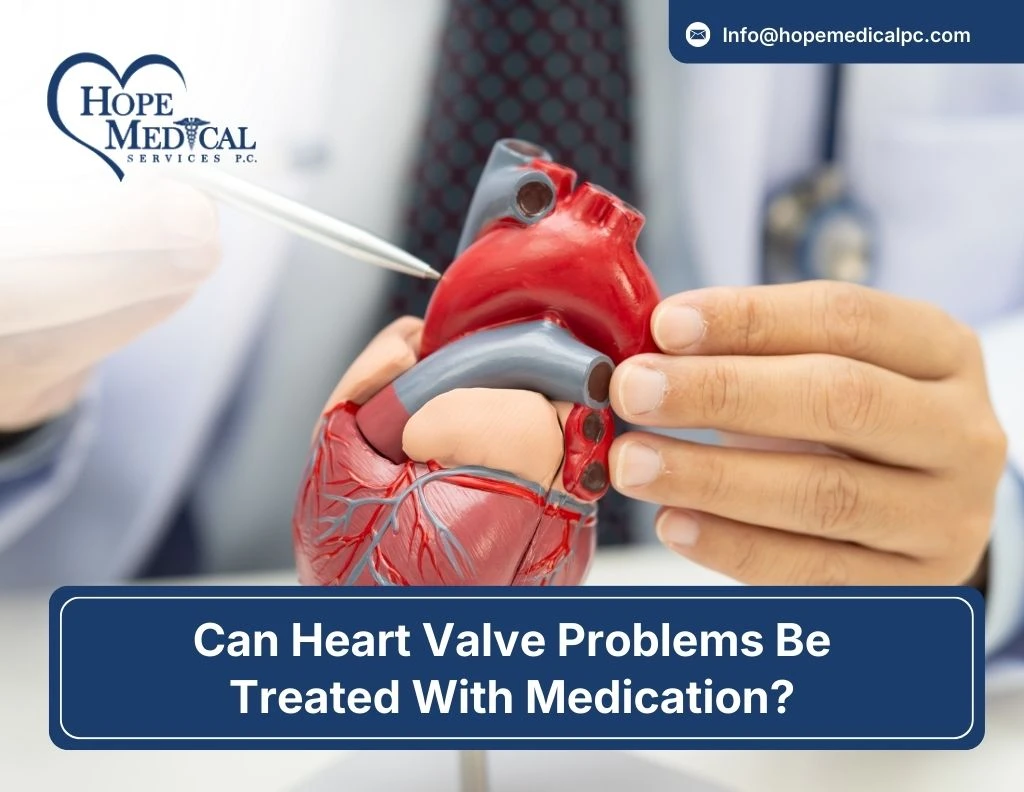
Can Heart Valve Problems Be Treated With Medication?
There’s no pill that can un-stiffen a calcified aortic valve, or repair a mitral valve that’s leaking because its leaflets no longer close properly. The structural problem, the physical malfunction of the valve itself, is beyond the reach of any medication currently available.
But here’s what people often miss: that doesn’t make medication useless.
Think of it this way: if a pipe in your house has a crack, you can’t fix the crack by controlling the water pressure, but you can prevent the damage from getting worse while you figure out the right repair. Medications work in a similar way. They manage the consequences of valve disease: the pressure changes, the fluid backup, and the strain on surrounding heart tissue. They buy time, protect the heart, and keep people functional sometimes for years.
How Do Medications Help People With Valve Problems?
Even though medications don’t fix the valve itself, they’re often a critical part of the treatment plan. Here’s how different medications help:
Diuretics (“Water Pills”)
When a valve isn’t working properly, fluid can back up into the lungs or accumulate in the legs. Diuretics help the kidneys flush out this excess fluid, reducing the breathlessness, swelling, and discomfort that valve disease can cause. They’re one of the most commonly used and immediately effective tools for symptom relief.
Beta-Blockers
A struggling heart often beats faster to try to compensate. Beta-blockers slow the heart rate, reduce its workload, and can help manage palpitations and irregular rhythms, which are especially common in people with mitral valve disease.
Blood Thinners (Anticoagulants)
Certain valve problems increase the risk of blood clots forming, particularly in people who also develop atrial fibrillation (an irregular heart rhythm) or those who have already had a mechanical valve replacement. Anticoagulants like warfarin or newer medications help prevent those clots from traveling to the brain and causing a stroke.
ACE Inhibitors & ARBs
These blood pressure medications reduce the force the heart has to pump against, easing the strain caused by a leaking (regurgitant) valve. They’re particularly useful for aortic or mitral regurgitation, and research suggests they may help slow the progression of heart enlargement that often accompanies these conditions.
Antibiotics (Preventive Use)
People with certain valve conditions, especially those with artificial valves or a history of infective endocarditis, may be prescribed prophylactic antibiotics before dental procedures or surgeries. This prevents bacteria from entering the bloodstream and infecting the already-vulnerable valve. It’s not treating the disease itself, but preventing a dangerous complication.
Can I Take Medications Instead of Having a Valve Procedure?
Whether you can rely on medications instead of a valve procedure largely depends on the severity o/f your valve disease. In mild to moderate cases, medications combined with lifestyle changes and regular monitoring, such as echocardiograms, can effectively manage symptoms and maintain heart function for many years. Many patients live comfortably without needing any intervention, as long as the condition remains stable and closely observed.
However, in severe valve disease, medications alone are not enough. A significantly damaged valve forces the heart to work harder, gradually weakening and enlarging the heart muscle over time, often before symptoms become obvious. At this stage, only repairing or replacing the valve can stop further damage. That’s why timely intervention is critical.
How Is Heart Valve Disease Treated?
Treatment for valve disease isn’t a single decision; it’s an evolving plan that adapts as your condition does. The spectrum typically looks like this:
- Watchful Waiting: For mild or early-stage disease with no symptoms, monitoring with regular imaging and checkups may be all that’s needed for years.
- Medication Management: Drugs to control symptoms, protect the heart, and reduce complication risks are often used alongside monitoring or after a procedure.
- Minimally Invasive Procedures: Catheter-based interventions like TAVR, balloon valvuloplasty, or MitraClip require no open chest.
- Surgical Repair or Replacement: For cases where the anatomy requires direct correction, open-heart surgery remains the gold standard, though it’s far safer today than it was even a decade ago.
The right path for you will depend on which valve is affected, the type and severity of the problem, your overall health, and your symptoms. This is a conversation to have with a cardiologist who specializes in valve disease, not a decision made in a single appointment.
When to ‘Talk to Your Doctor and What to Ask
Seek urgent care if you experience sudden, severe shortness of breath, chest pain, fainting, or a dramatic worsening of symptoms. These can signal that your condition has progressed quickly.
For your next cardiology appointment, consider asking:
- “Is my valve disease mild, moderate, or severe right now?”
- “What specific signs are you watching for that would change my treatment plan?”
- “How often do I need an echocardiogram?”
- “At what point would you recommend a procedure, and what kind?”
- “Are there lifestyle changes that could slow the progression?”
Being an informed patient isn’t just empowering, it’s part of the treatment. The more you understand your condition, the better equipped you are to notice changes and advocate for yourself.
The Bottom Line
Medications cannot cure a damaged heart valve; they can’t open a stiff valve or seal a leak. However, they are far from powerless. They help manage symptoms, protect the heart from further damage, prevent dangerous complications, and, in many cases, allow years of comfortable, active living without surgery.
Understanding where you fall on the spectrum is crucial. Mild valve disease can often be managed with careful monitoring and the right medications, while severe cases require timely intervention to prevent long-term heart damage. If you’ve been diagnosed or are experiencing symptoms, learning more about valvular heart disease and your treatment options is an important next step toward protecting your heart health.
Most people diagnosed with valve disease can still enjoy full, active lives when they have the right care, timing, and medical team.