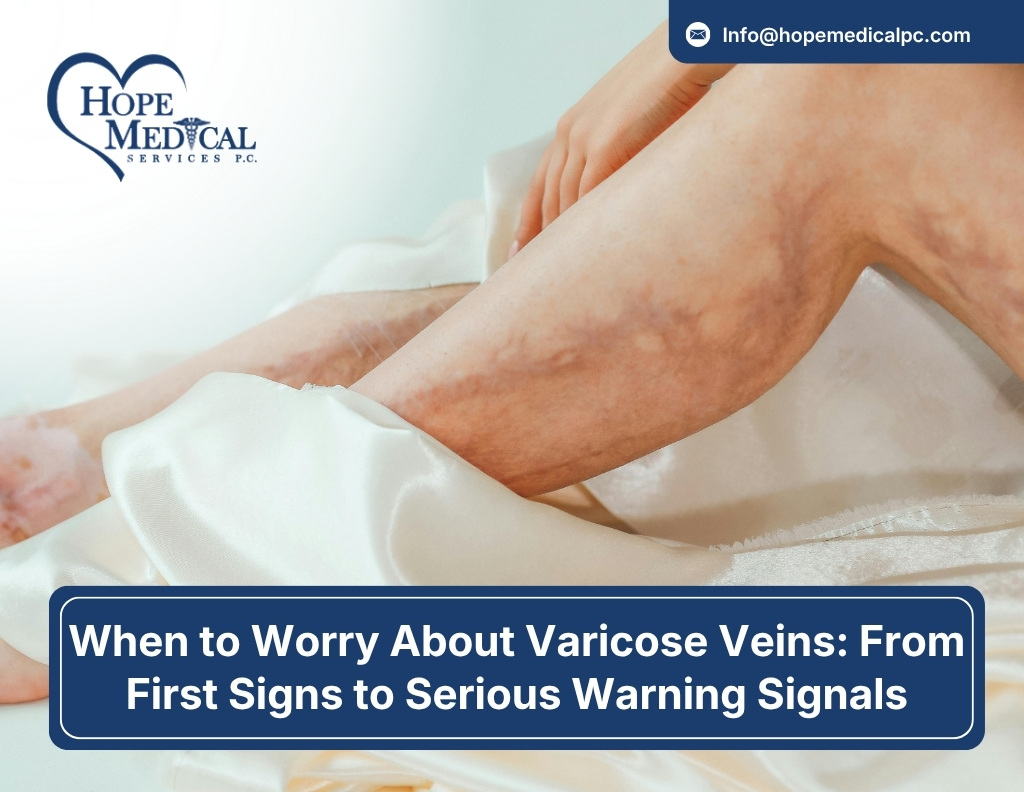
You’ve noticed the twisted, rope-like veins visible beneath the skin of your legs. Maybe they showed up after a long pregnancy, years of standing for work, or simply crept in over time. You’ve probably wondered: Are these just cosmetic? Or is my body telling me something serious?
The honest answer: it depends, and knowing the difference could protect your legs, your circulation, and your long-term health.
What Do Varicose Veins Look Like? Identifying Them Correctly
Before you can assess risk, you need to know what you’re actually looking at. Many people confuse varicose veins with spider veins, a far less serious condition.
| Feature | Varicose Veins | Spider Veins |
| Size | Large, 3mm+ in diameter | Tiny, hair-thin |
| Appearance | Bulging, twisted, rope-like | Flat, web-like, star patterns |
| Color | Dark blue, purple, or greenish | Red, blue, or purple |
| Location | Legs, calves, backs of knees | Face, ankles, thighs |
| Texture | Raised and bumpy to the touch | Flat under skin |
| Symptoms | Pain, heaviness, swelling | Usually none |
| Risk Level | Can become medically serious | Mostly cosmetic |
Dark Blue Veins on Legs: Should You Be Alarmed?
Dark blue or purple-colored veins on your legs are a hallmark sign of varicose veins. The dark color occurs because the blood inside has become deoxygenated, and it’s sitting stagnant in veins that can no longer pump it back to your heart efficiently.
Dark blue veins on their own are not an emergency. But when that discoloration is accompanied by swelling, skin changes, or pain, your body is signaling that the vascular problem has progressed and needs medical attention.
Stages of Varicose Veins: The CEAP Classification Explained
Varicose veins are not a single condition; they progress through clinically recognized stages. Understanding where you fall on the spectrum helps you and your doctor decide the urgency of treatment.
| Stage | CEAP Class | What It Looks Like | When to Worry? |
| Stage 1 | C1 | Spider veins, tiny visible vessels | No immediate concern monitor |
| Stage 2 | C2 | Visible, bulging varicose veins, no swelling | Worth evaluation, not urgent |
| Stage 3 | C3 | Varicose veins + leg swelling (edema) | See a doctor if circulation is affected |
| Stage 4 | C4 | Skin discoloration, thickening, eczema | Urgent risk of complications |
| Stage 5 | C5 | Healed venous ulcer | High priority: prevent recurrence |
| Stage 6 | C6 | Active, open venous ulcer | EMERGENCY immediate care needed |
When to Worry About Varicose Veins: The Red Flag Checklist
Most people don’t need to panic about varicose veins — but certain symptoms demand prompt attention. The following warning signs indicate that your condition has moved beyond cosmetic into medically significant territory.
Seek Prompt Medical Evaluation If You Experience:
- Leg pain that worsens after standing or sitting for long periods
- A heavy, aching, or tired feeling in your legs by the end of the day
- Persistent swelling in the ankles or feet that doesn’t improve with rest
- Skin near your ankle is turning brown, reddish, or developing a leathery texture
- Itching or burning skin directly over a varicose vein
- A rash or eczema-like irritation on your lower leg (venous stasis dermatitis)
- Sudden bleeding from a vein, even minor trauma, can rupture a varicosed vessel
- A hard, red, painful lump on a vein may indicate superficial thrombophlebitis
If you’re experiencing any of these symptoms, our Varicose Veins Treatment specialists can evaluate your condition and recommend the right course of action before it progresses further.
When Do Varicose Veins Start? Understanding Your Risk Timeline
Varicose veins don’t appear overnight. They develop gradually, often beginning years before they become visible, and your risk is shaped by a combination of genetics, lifestyle, and life events.
Most Common Onset Periods:
1.Late 20s to 30s. First appearance, often after pregnancy or prolonged standing work. Usually minor and cosmetic at this stage.
2.40s to 50s .Veins become more visible, and symptoms like leg heaviness begin. This is when most people first seek evaluation.
3.60s and beyond. Without treatment, varicose veins worsen progressively. Skin changes and ulcer risk increase significantly.
Risk Factors That Accelerate Onset:
| Risk Factor | Why It Causes Varicose Veins |
| Family History | Vein valve weakness is largely inherited; if a parent has it, your risk doubles |
| Pregnancy | Increased blood volume + uterine pressure on pelvic veins weakens leg vein valves |
| Prolonged Standing | Jobs requiring long hours upright (nurses, teachers, retail) strain the vein walls |
| Obesity | Excess weight increases abdominal pressure, impeding blood return from the legs |
| Sedentary Lifestyle | Poor muscle pump activity in calves means the veins work harder |
| Hormonal Changes | Estrogen relaxes the vein walls during menopause, and birth control pills increase the risk |
| Prior Blood Clots | DVT history damages the vein valves permanently, accelerating the disease |
When Are Varicose Veins Dangerous? Complications You Cannot Ignore
For most people, varicose veins remain a manageable condition. But for a significant minority, untreated varicose veins lead to serious, limb-threatening complications. Here’s what can go wrong and why prevention matters more than you think.
1. Chronic Venous Insufficiency (CVI)
When varicose veins are left untreated for years, the underlying valve dysfunction spreads. Blood pools chronically in the legs, damaging surrounding tissue. CVI causes permanent swelling and skin breakdown, and can lead to venous leg ulcers that can take months to heal and frequently return without proper vascular care.
2. Superficial Thrombophlebitis
This is an inflammation of the vein itself, often accompanied by a blood clot close to the skin’s surface. It presents as a hard, red, painful cord along the vein. While usually not life-threatening on its own, it significantly increases the risk of DVT and requires urgent medical evaluation.
3. Deep Vein Thrombosis (DVT)
Studies show that people with varicose veins have a markedly higher risk of developing DVT, a clot in the deep veins of the leg. Symptoms include unilateral leg swelling, warmth, and redness. DVT is a medical emergency. If a clot dislodges and travels to the lungs (pulmonary embolism), it can be fatal.
4. Venous Leg Ulcers
These are open wounds, typically appearing near the inner ankle, that develop when venous pressure becomes so elevated that it damages capillary beds and tissue. They are notoriously slow to heal, are prone to infection, and frequently recur without definitive vascular treatment. Venous ulcers account for the majority of chronic wound cases seen in vascular clinics.
5. Spontaneous Bleeding
Varicose veins bulge close to the skin surface and become fragile over time. Even minor trauma, such as a knock against furniture or the edge of a step, can cause a varicose vein to rupture, leading to significant external bleeding. This is more common in older patients and can be alarming, though it can typically be controlled by elevating the leg and applying pressure.
Varicose vein PAD treatment services that go untreated can also mask a deeper circulation problem. Our PAD Diagnosis Services can help determine whether peripheral arterial disease is contributing to your leg symptoms — a critical distinction that changes your treatment plan entirely.
When to See a Doctor for Varicose Veins: A Decision Framework
Not sure whether your situation warrants a visit? Use this practical framework to guide your decision.
| Your Situation | Action to Take |
| Veins are visible, but you have no pain or swelling | Monitor at home, schedule a routine evaluation within 6–12 months |
| Aching, heaviness, or fatigue in the legs at the end of the day | Schedule an appointment within the next 4–6 weeks |
| Ankle swelling that doesn’t improve with rest/elevation | See a vascular specialist within 1–2 weeks |
| Skin discoloration, darkening, or hardening near the ankle | Urgent evaluation book within days |
| Itching, rash, or open sore on the lower leg | Urgent evaluation book within days |
| Sudden leg swelling + pain + warmth + redness | Go to the Emergency Room immediately, and rule out DVT |
| Chest pain following leg swelling | Call 911 — this may be a pulmonary embolism |
What Doctor Treats Varicose Veins?
One of the most common questions patients ask is: “Who should I actually see for this?” The answer depends on the severity of your condition.
Your Treatment Team Explained:
- Vascular Specialist / Interventional Cardiologist:
Your primary specialist for diagnosing and treating varicose veins. Performs duplex ultrasound, endovenous procedures, and comprehensive vascular evaluations. This is who you need if your veins are symptomatic or advancing through stages.
- Phlebologist:
A physician specifically focused on vein disorders. Can manage sclerotherapy and minor vein procedures for earlier-stage disease.
- Dermatologist
May treat superficial spider veins with laser or sclerotherapy, but is not equipped to manage underlying chronic venous insufficiency.
- Primary Care Physician :
A good starting point for mild symptoms; will refer you to a vascular specialist once varicose veins are confirmed or symptomatic
When to Treat Varicose Veins: Medical vs. Elective Treatment
Timing matters both for your health outcome and for insurance coverage. Here’s how to understand when treatment transitions from optional to medically necessary.
Conservative Management First (Stages 1–2):
- Graduated compression stockings (20–30 mmHg or 30–40 mmHg as prescribed)
- Regular low-impact exercise, such as walking, cycling, and swimming, to activate the calf muscle pump
- Leg elevation for 15–20 minutes several times daily to reduce pooling
- Weight management to reduce intra-abdominal pressure on leg veins
- Avoid prolonged standing or sitting, and take movement breaks every 30–45 minutes
When Intervention Becomes Medically Necessary (Stages 3–6):
If conservative measures fail after 3–6 months, or if you present with Stage 3+ disease, minimally invasive procedures are recommended — and typically covered by insurance:
- Endovenous Laser Ablation (EVLA)
A laser fiber is inserted into the vein and seals it shut. Highly effective with minimal downtime. - Radiofrequency Ablation (RFA):
Uses controlled heat to close the diseased vein. Office-based procedure with excellent outcomes. - Sclerotherapy:
A chemical solution is injected directly into varicose or spider veins, causing them to collapse and fade. - Ambulatory Phlebectomy :
Tiny incisions remove bulging veins near the skin surface. Same-day procedure under local anesthesia. - Compression Therapy + Wound Care :
For patients with active venous ulcers, this is the foundation of healing combined with vein ablation.
What You Can Do Right Now: Smart Home Management
While there is no home remedy that reverses varicose veins, the following strategies genuinely slow progression and reduce symptom burden between appointments, especially in the early stages.
| Strategy | How It Helps | Frequency |
| Wear compression stockings | Reduces vein diameter and blood pooling | Daily |
| Walk 30+ minutes | It activates the calf muscle pump to push blood upward | Daily |
| Elevate legs above heart level | Uses gravity to assist venous return | 3–4x/day, 15–20 min |
| Avoid crossing legs | Prevents additional vein compression | Always |
| Stay hydrated | Thinner blood flows more easily through compromised veins | 8+ glasses/day |
| Avoid high heels | Flat shoes engage calf muscles more effectively | Ongoing |
| Maintain a healthy weight | Reduces pressure on pelvic and leg veins | Ongoing |
If you’re managing symptoms at home but are unsure about your circulation health, an Ankle Brachial Index (ABI) test is a simple, non-invasive way to assess blood flow in your legs and catch any underlying arterial issues early.
Final Thoughts
Varicose veins are rarely a reason to panic, but they are always a reason to pay attention. The gap between a manageable cosmetic issue and serious vascular disease is crossed gradually, and often silently. By the time pain, swelling, or skin changes appear, your veins have typically been struggling for years.
If you’ve been putting off that conversation with a specialist, today is the right time to stop waiting. Visit Hope Medical Pc to learn more about your options and take the first step toward healthier veins before a small problem becomes a bigger one.