If you have ever been told your arteries are “hardening” or that you have plaque buildup, you may have wondered: Is atherosclerosis dangerous? The honest, medically grounded answer is yes, it is one of the most serious and underrecognized threats to long-term health. Atherosclerosis is the underlying cause of most heart attacks, strokes, and cases of peripheral artery disease, collectively responsible for roughly one in every three deaths in the United States.
Yet what makes this condition particularly dangerous is not just its severity; it is its silence. Most people with atherosclerosis have no symptoms for years, or even decades. By the time a warning sign appears, significant arterial damage may already be present. Understanding how this disease develops, what it feels like, and how it can be detected and managed is not optional knowledge for adults; it is essential.
What Is Atherosclerosis?
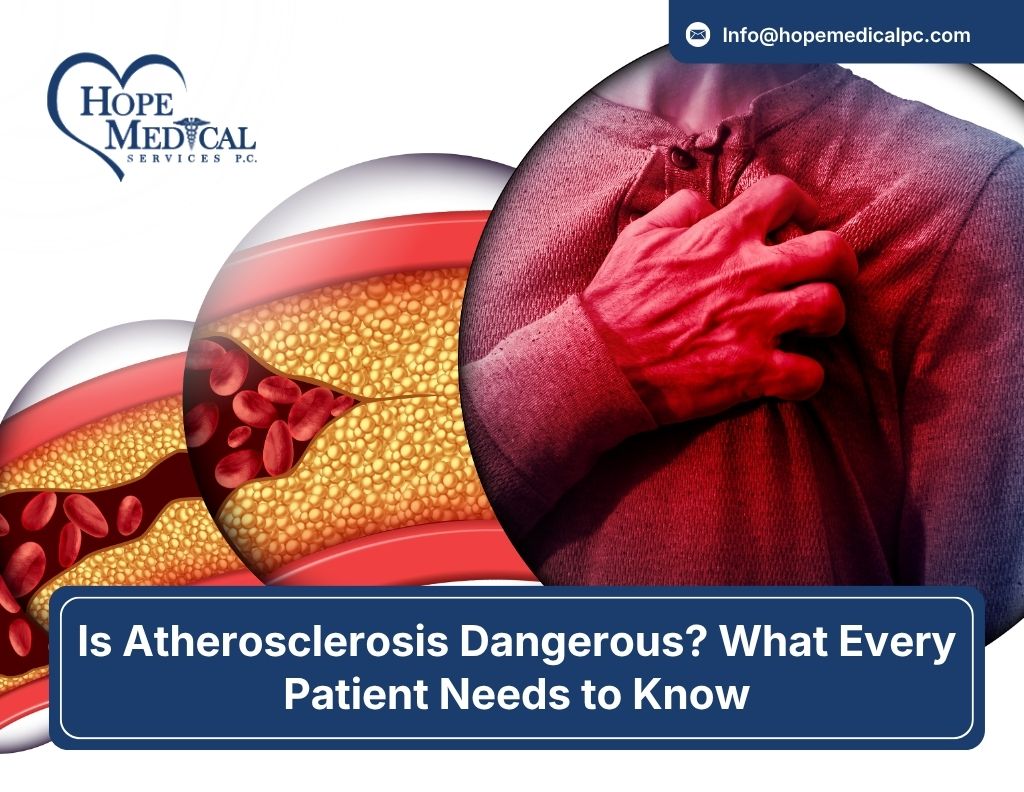
Atherosclerosis is the gradual buildup of plaque, a combination of cholesterol, fatty deposits, calcium, cellular waste, and inflammatory material inside the walls of your arteries. Over time, this plaque hardens and narrows the arterial channel, reducing the flow of oxygen-rich blood to vital organs including the heart, brain, kidneys, and limbs.
The term comes from the Greek words athere (gruel or paste) and skleros (hard), which together describe the disease’s defining feature: a paste-like accumulation that eventually calcifies into a rigid, artery-stiffening lesion.
What Causes Atherosclerosis?
Atherosclerosis begins when the inner lining of an artery, called the endothelium, becomes damaged or inflamed. Once the endothelium is compromised, LDL (“bad”) cholesterol particles penetrate beneath the arterial wall, where they become oxidized and trigger an immune response. White blood cells rush to the site, engulf the oxidized LDL, and transform into foam cells that gradually accumulate, forming a fatty streak. This inflammatory process is self-reinforcing and, without intervention, does not stop.
The most well-established risk factors for atherosclerosis include:
- High LDL cholesterol and low HDL cholesterol
- High blood pressure (hypertension)
- Smoking and tobacco use
- Type 2 diabetes and insulin resistance
- Chronic inflammation (elevated CRP, metabolic syndrome)
- Obesity, particularly abdominal or visceral fat
- Physical inactivity
- A diet high in saturated fats, trans fats, and refined sugars
- Family history of premature cardiovascular disease
- Age risk increases significantly after 45 in men and 55 in women
Atherosclerosis Risk Factor
| Risk Category | Examples | Impact Level |
| Lipid Abnormalities | High LDL, Low HDL, High Triglycerides | Very High |
| Lifestyle Factors | Smoking, Inactivity, Poor Diet | Very High |
| Metabolic Conditions | Diabetes, Hypertension, Obesity | High |
| Genetic / Fixed Factors | Family History, Age, Sex | Moderate–High |
| Inflammatory Markers | Elevated CRP, Chronic infections | Moderate |
What Are the Warning Signs of Atherosclerosis?
One of the most clinically important facts about atherosclerosis is that it is typically silent until it has caused substantial arterial narrowing or until a plaque ruptures. Most people do not feel anything unusual for years. Symptoms, when they finally emerge, depend on which arteries are affected.
Coronary Artery Involvement (Heart)
- Chest tightness, pressure, or pain (angina) during physical activity or stress
- Shortness of breath with exertion that was previously well-tolerated
- Unexplained fatigue, especially in women
- Heart palpitations or irregular heartbeat
- Cold sweats, nausea, or dizziness during activity
Carotid Artery Involvement (Brain)
- Sudden, temporary weakness or numbness on one side of the face or body
- Difficulty speaking or understanding speech (even briefly; this may be a TIA)
- Sudden blurred or loss of vision in one eye
- Severe, sudden headache with no known cause
Peripheral Artery Involvement (Legs/Arms)
- Cramping or aching pain in the calf, thigh, or buttock when walking (claudication)
- Pain that resolves with rest but returns with activity
- Numbness, weakness, or coldness in the lower legs or feet
- Slow-healing wounds or sores on the feet and legs
- Erectile dysfunction in men an early and underrecognized vascular warning sign
Why Is Atherosclerosis Dangerous?
The danger of atherosclerosis is not only that it restricts blood flow, but it is also that it does so quietly, progressively, and irreversibly, until a critical event occurs. Here is why it demands serious medical attention:
- Plaque Can Rupture Without Warning. When a plaque suddenly breaks open, the body responds by forming a blood clot at the site. In a coronary artery, this clot can completely block blood flow to the heart muscle within minutes, causing a heart attack. In the brain, the same process causes an ischemic stroke.
- It Affects Multiple Organ Systems Because atherosclerosis is systemic, a person with significant coronary plaque almost certainly has plaque developing elsewhere — in the carotids, the renal arteries, the aorta, and the peripheral arteries of the legs.
- It Accelerates Other Diseases. Atherosclerosis significantly worsens outcomes in people with diabetes, kidney disease, and hypertension. The combination of these conditions dramatically elevates cardiovascular mortality risk.
- It Causes Vascular Dementia. Reduced blood flow to the brain over time can lead to vascular dementia, a form of cognitive decline that is often misattributed to normal aging.
- It Progresses Faster in Young Adults Than Previously Thought. Groundbreaking research published in the Journal of the American College of Cardiology showed that even mildly elevated cholesterol and blood pressure in young adults accelerate subclinical atherosclerosis significantly, making early risk management critical.
Can Atherosclerosis Cause a Heart Attack or Stroke?
Yes, and this is the most direct and dangerous outcome of the disease. Atherosclerosis is the single leading underlying cause of both heart attacks (myocardial infarction) and ischemic strokes. Understanding the mechanism helps explain why the risk is so serious.
How a Heart Attack Occurs
As plaque accumulates in a coronary artery, the artery narrows. If the plaque’s fibrous cap ruptures, a blood clot forms instantly at the rupture site. This clot can fully block the artery, cutting off oxygen supply to the heart muscle. The heart muscle begins to die within minutes. This is a myocardial infarction, a heart attack.
How a Stroke Occurs
In the carotid or cerebral arteries, plaque buildup can lead to either a sudden rupture with clot formation (ischemic stroke), or small plaque fragments can break off and travel to smaller brain arteries, causing a blockage there. A transient ischemic attack (TIA), sometimes called a “mini-stroke,” occurs when this blockage is temporary, but it is a critical warning sign that a major stroke may be imminent.
Heart Attack vs. Stroke: Atherosclerosis as the Common Root
| Feature | Heart Attack | Stroke |
| Artery Affected | Coronary arteries | Carotid or cerebral arteries |
| Organ at Risk | Heart muscle | Brain tissue |
| Key Symptom | Chest pain, shortness of breath | Facial drooping, arm weakness, speech difficulty |
| Time Sensitivity | “Time is muscle” act within 90 min | “Time is brain” act within 4.5 hrs |
| Root Cause | Plaque rupture + clot in coronary artery | Plaque rupture + clot or embolism in the brain |
What Does Atherosclerosis Feel Like?
For most people, atherosclerosis does not feel like anything, at least not initially. This is why it earns the title of a “silent” disease. However, as arterial narrowing progresses past a critical threshold (typically 70% or greater blockage), certain sensations may begin to appear:
- A heavy, squeezing, or pressure-like sensation in the chest that comes on with exercise and goes away with rest is angina
- Leg fatigue, cramping, or a burning ache in the calves when walking any significant distance, particularly uphill
- A sense of “heaviness” in the arms or legs during physical activity
- Brief episodes of blurred vision or dizziness
- Unusual breathlessness when climbing stairs or doing activities that were previously effortless
Many patients describe early angina as feeling like someone is “sitting on their chest” or a tightness that feels more like indigestion than pain. Women often experience atypical symptoms, such as fatigue, jaw pain, back discomfort, and nausea, rather than classic chest pressure. These subtler presentations are a major reason heart disease is underdiagnosed in women.
How Is Atherosclerosis Diagnosed?
Because atherosclerosis is asymptomatic in its early stages, formal diagnostic testing plays a critical role in identifying the disease before it causes irreversible damage. Your physician will typically begin with a clinical assessment of your risk factors and symptoms, then order appropriate tests.
Common Diagnostic Tests for Atherosclerosis
| Diagnostic Test | What It Measures | Best Used For |
| Lipid Panel (Blood Test) | Total cholesterol, LDL, HDL, triglycerides | Initial risk screening |
| Blood Pressure Measurement | Systolic and diastolic pressure | Hypertension detection |
| Coronary Artery Calcium (CAC) Score | Amount of calcified plaque in coronary arteries | Subclinical CAD detection |
| Carotid Ultrasound (IMT) | Thickness and plaque in carotid arteries | Stroke risk assessment |
| Ankle-Brachial Index (ABI) | Blood pressure ratio, arm vs. ankle | Peripheral artery disease |
| Stress Test (Exercise ECG) | The heart’s electrical activity under stress | Coronary artery disease symptoms |
| CT Angiography | Detailed 3D images of arterial blockages | Suspected significant stenosis |
| Coronary Angiography | Direct visualization of coronary arteries | Pre-procedure/definitive diagnosis |
How to Prevent Atherosclerosis
Prevention is overwhelmingly more effective than treatment. Because atherosclerosis begins silently in early adulthood and progresses over decades, the earlier risk factors are addressed, the better the long-term outcome. Prevention strategies fall into two categories: lifestyle modification and medical management.
Lifestyle Modifications
- Adopt a Heart-Healthy Diet. Prioritize vegetables, legumes, whole grains, fatty fish, and olive oil. Limit saturated fat, trans fat, red meat, and ultra-processed foods. The Mediterranean diet and the DASH diet have the strongest evidence for cardiovascular protection.
- Engage in Regular Aerobic Exercise. Aim for at least 150 minutes of moderate-intensity aerobic activity per week. Exercise reduces LDL, raises HDL, lowers blood pressure, reduces systemic inflammation, and directly improves endothelial function.
- Quit Smoking. Tobacco use accelerates atherosclerosis faster than almost any other modifiable risk factor. Even 1–2 years after quitting, cardiovascular risk begins to decline measurably.
- Maintain a Healthy Body Weight. Abdominal obesity is a particularly strong driver of insulin resistance and vascular inflammation. Losing even 5–10% of body weight can produce clinically meaningful improvements in blood pressure, lipids, and blood sugar.
- Manage Stress: Chronic psychological stress elevates cortisol and inflammatory markers. Mind-body practices, adequate sleep, and social support all contribute to cardiovascular protection.
Medical Management
- Statins: The cornerstone of pharmacological atherosclerosis prevention, proven to lower LDL, reduce inflammation, and stabilize plaque
- Antihypertensive medications, ACE inhibitors, ARBs, and calcium channel blockers protect the arterial endothelium directly
- Blood sugar control. For patients with diabetes or prediabetes, HbA1c management is critical to slowing atherosclerotic progression
- Low-dose aspirin for certain high-risk patients, prescribed by a physician after individual risk-benefit assessment
- PCSK9 inhibitors for patients with very high LDL who cannot adequately respond to statins alone
Evidence-Based Prevention Targets for High-Risk Adults
| Health Marker | Optimal Target | High-Risk Target |
| LDL Cholesterol | < 100 mg/dL | < 70 mg/dL |
| Blood Pressure | < 130/80 mmHg | < 120/80 mmHg |
| HbA1c (Diabetics) | < 7.0% | < 6.5% |
| BMI | 18.5–24.9 kg/m² | Below 25 kg/m² |
| Physical Activity | 150 min/week moderate | 150–300 min/week |
| Smoking Status | Non-smoker | Complete cessation |
The Bottom Line
Yes, unquestionably. Atherosclerosis is one of the most dangerous chronic diseases on the planet, not because it is dramatic, but because it is not. It progresses in silence, builds over decades, and strikes suddenly, often without prior warning. It is the engine behind heart attacks, strokes, peripheral artery disease, vascular dementia, and kidney failure.
At Hope Medical PC, we believe that knowing your cardiovascular risk is not optional; it is one of the most important things you can do for your long-term health. Whether you are in your 30s and concerned about prevention, or in your 60s managing an existing diagnosis, our team is here to provide personalized, evidence-based care that goes beyond generic advice.