If you’ve been told you need carotid artery surgery, one of the first questions you’re probably asking is simple: “Will I actually feel better afterward?” It’s a fair question, and an important one. Carotid artery disease often develops silently, with plaques building up in the arteries that supply blood to your brain, sometimes without obvious symptoms until a stroke or mini-stroke occurs.
The good news is that for most patients, carotid artery surgery is performed not just to relieve symptoms, but to prevent a far more serious event, like a stroke, from happening in the future. Understanding what to expect before, during, and after the procedure can ease your worries and help you prepare for a smoother recovery.
What Is Carotid Artery Surgery and Why Is It Performed?
The carotid arteries are the two major blood vessels in your neck that carry oxygen-rich blood to your brain. Over time, fatty deposits called plaque can build up inside these arteries, a condition known as carotid artery disease or carotid stenosis. As the plaque narrows the artery, blood flow to the brain decreases, and pieces of plaque can break loose and travel to the brain, causing a stroke.
Carotid artery surgery is performed to remove or bypass this blockage and restore healthy blood flow. There are two primary surgical approaches:
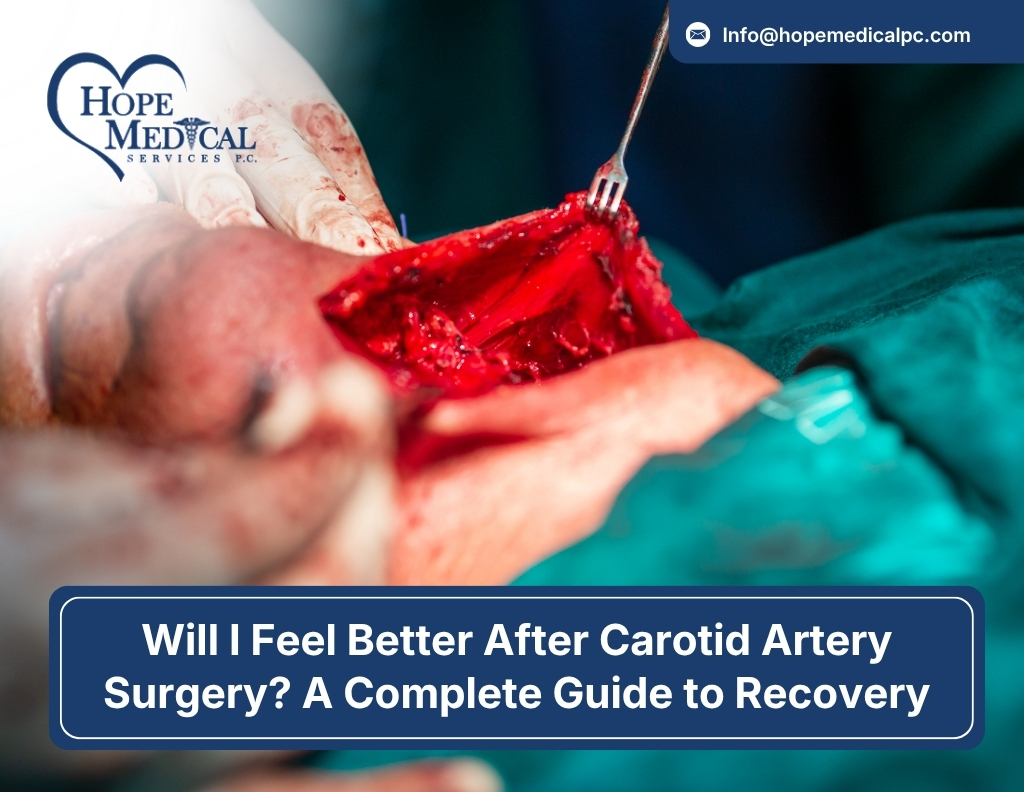
- Carotid Endarterectomy (CEA): The surgeon makes an incision in the neck and directly removes the plaque from inside the artery wall.
- Carotid Artery Stenting (CAS): A minimally invasive procedure where a catheter is used to place a small mesh stent that holds the artery open.
- Your vascular surgeon will recommend one approach over the other based on factors like the degree of blockage, your overall health, age, and anatomy.
| Reason for Surgery | Goal of the Procedure |
| Severe carotid artery narrowing (70% or more) | Restore normal blood flow to the brain |
| History of stroke or mini-stroke (TIA) | Prevent a second, potentially larger stroke |
| Symptomatic blockage with neurological symptoms | Relieve symptoms and reduce future risk |
| Significant blockage found on imaging, even without symptoms | Prevent a first stroke before it happens |
What Symptoms May Improve After Carotid Artery Surgery?
Many patients are surprised to learn that carotid artery disease doesn’t always cause noticeable day-to-day symptoms. However, when symptoms are present, they’re often related to reduced blood flow to the brain or small clots breaking off the plaque. Surgery can meaningfully improve or resolve several of these issues.
- Reduced frequency of mini-strokes (TIAs), such as sudden weakness, numbness, or vision changes
- Improved mental clarity and concentration, especially if blood flow was significantly restricted
- Fewer episodes of dizziness or lightheadedness caused by inconsistent blood flow
- Reduced headaches linked to vascular insufficiency
- Improved balance and coordination in some patients
- Lower long-term risk of stroke-related symptoms, including slurred speech or facial drooping
It’s worth noting that carotid surgery is primarily a preventive procedure. If you were largely asymptomatic before surgery, you may not notice a dramatic day-to-day change, but you will have significantly reduced your risk of a future stroke, which is the real goal.
When Will I Feel Better After Carotid Artery Surgery?
Recovery timelines vary from person to person, but most patients notice gradual improvement over the days and weeks following surgery. Here’s a general overview of what many patients experience.
| Time After Surgery | What You Might Notice |
| First 24–48 hours | Some neck soreness, swelling, or fatigue; closely monitored in the hospital |
| 3–7 days | Swelling begins to subside; energy levels start to return |
| 1–2 weeks | Incision healing well; reduced pain; light activity resumes |
| 3–4 weeks | Most patients feel noticeably stronger and more like themselves |
| 6 weeks and beyond | Full recovery for most; resumption of normal routines |
If your surgery was performed to address active symptoms like TIAs or dizziness, you may notice improvement fairly quickly, sometimes within the first few days, as healthy blood flow is restored. If your surgery was preventive, the main benefit (a lower stroke risk) won’t necessarily feel like a dramatic shift, but it’s just as important
What Should You Expect During Recovery?
Recovery from carotid artery surgery is generally smoother than many patients anticipate, especially with traditional endarterectomy continuing to show strong safety profiles. Here’s what your recovery journey will likely involve.
Immediately After Surgery
- A short hospital stay, typically one to two days, for monitoring
- Regular checks of blood pressure, heart rate, and neurological function
- Mild discomfort or a feeling of tightness at the incision site
- Possible temporary hoarseness or difficulty swallowing, which usually resolves quickly
At Home: The First Two Weeks
- Keeping the incision clean and dry as instructed by your care team
- Avoiding heavy lifting, strenuous exercise, or driving until cleared by your surgeon
- Taking prescribed medications, including blood thinners or antiplatelet drugs, exactly as directed
- Attending a follow-up appointment to check healing and blood flow
Tips for a Smoother Recovery
- Rest when needed, but try to stay lightly active with short walks to support circulation
- Watch for signs of infection, such as redness, warmth, or drainage at the incision site
- Report any new symptoms, like sudden weakness, slurred speech, or vision changes, immediately
- Keep all follow-up imaging and check-up appointments to confirm the artery remains open
How Long Does It Take to Recover From Carotid Artery Surgery?
Most patients who undergo carotid endarterectomy can expect to return to normal daily activities within two to four weeks. Carotid artery stenting, being less invasive, often involves an even shorter initial recovery, sometimes allowing patients to resume light activity within a few days.
Full recovery, including complete healing of the incision and a return to all prior activity levels, including exercise, typically takes around four to six weeks. Several factors can influence your personal timeline:
- Your age and overall health before surgery
- Whether you had symptoms or other vascular conditions beforehand
- Which surgical technique was used
- How closely you follow your surgeon’s post-operative instructions
- The presence of other health conditions like diabetes or heart disease
Your vascular surgeon will give you a personalized recovery timeline based on your specific case, but most patients are pleasantly surprised by how quickly they feel like themselves again.
What Are the Long-Term Benefits of Carotid Artery Surgery?
While short-term symptom relief matters, the true value of carotid artery surgery lies in its long-term protective effects. Removing or bypassing a significant blockage substantially lowers your risk of a major, potentially disabling stroke.
- Significantly reduced risk of future stroke, often the primary motivation for surgery
- Improved, more consistent blood flow to the brain, supporting cognitive health over time
- Lower likelihood of recurring TIAs (mini-strokes)
- Greater peace of mind, knowing a major source of stroke risk has been addressed
- Better long-term quality of life, with most patients returning fully to work, hobbies, and exercise
Long-term studies on carotid endarterectomy have shown durable results for most patients, with many experiencing years of stroke-free living after a successful procedure. Of course, ongoing management of risk factors, like blood pressure, cholesterol, and blood sugar, remains essential to protecting your results over the long run.
Does Carotid Artery Surgery Improve Blood Flow?
Yes. Improving blood flow to the brain is the central purpose of carotid artery surgery. By removing the plaque (in endarterectomy) or holding the artery open (with a stent), the procedure widens the narrowed passage, allowing blood to move more freely and consistently to the brain.
This improved blood flow is what drives most of the benefits discussed throughout this article, from reduced TIA frequency to better cognitive clarity and, most importantly, a sharply lower risk of stroke. Your care team may confirm improved blood flow using imaging tests, such as a carotid ultrasound, in the weeks following your procedure.
Final Thoughts
So, will you feel better after carotid artery surgery? For most patients, the answer is yes, though what “feeling better” looks like can vary. Some notice clear symptom relief within days. Others feel largely the same day-to-day but gain something just as valuable: a significantly reduced risk of stroke and greater long-term protection for their brain health.
Recovery is generally straightforward, with most people returning to their normal routines within a few weeks. If you have questions about your specific procedure, recovery timeline, or symptoms, don’t hesitate to reach out to your care team. At Hope Medical PC., our vascular specialists are here to guide you through every step of your carotid artery surgery journey, from diagnosis to full recovery.