A stroke is one of the most serious medical emergencies a person can experience. Every second matters, yet what if a stroke happened and you had absolutely no idea? This is not a rare or abstract scenario. Many people each year experience what medical professionals call a “silent stroke,” a brain event that occurs without obvious, dramatic symptoms.
So, can you have a stroke and not know it? The answer is yes, and the consequences can be serious.
What Is a Stroke, and How Can It Go Unnoticed?
A stroke occurs when the blood supply to part of the brain is cut off, either by a blockage (ischemic stroke) or a burst blood vessel (hemorrhagic stroke). Brain cells begin to die within minutes of losing oxygen.
So how is it possible to have a stroke and not know it? The answer lies in which part of the brain is affected. If the stroke impacts a region that controls major motor or speech functions, symptoms are obvious and immediate. But if it affects a smaller or “quieter” area of the brain responsible for cognition, mood, or coordination , mood, or coordination, the event can pass without the person realizing anything has happened.
These are called silent strokes or silent cerebral infarctions (SCIs). Studies estimate that silent strokes are far more common than symptomatic strokes, occurring in an estimated 10 to 15 million Americans each year, compared with approximately 800,000 recognized strokes annually.
Is It Possible to Have a Stroke and Not Know It? Yes, Here’s Why
Is it possible to have a stroke and not know it? Medically, yes. A silent stroke causes real brain injury but produces no symptoms that the person can readily identify. There are several reasons why this happens:
- Location of the stroke: The brain has regions whose damage doesn’t produce immediate sensory or motor symptoms. The white matter and small vessels deep in the brain are common sites of silent strokes.
- Mild severity: If the affected blood vessel is very small, the area of damage may be so minor that the brain compensates quickly through neuroplasticity.
- Gradual onset: Unlike dramatic strokes with sudden paralysis, a silent event may be so brief that it resembles passing fatigue or slight disorientation.
- Lack of awareness: Many people dismiss subtle neurological changes as stress, poor sleep, or aging, never associating them with a possible stroke.
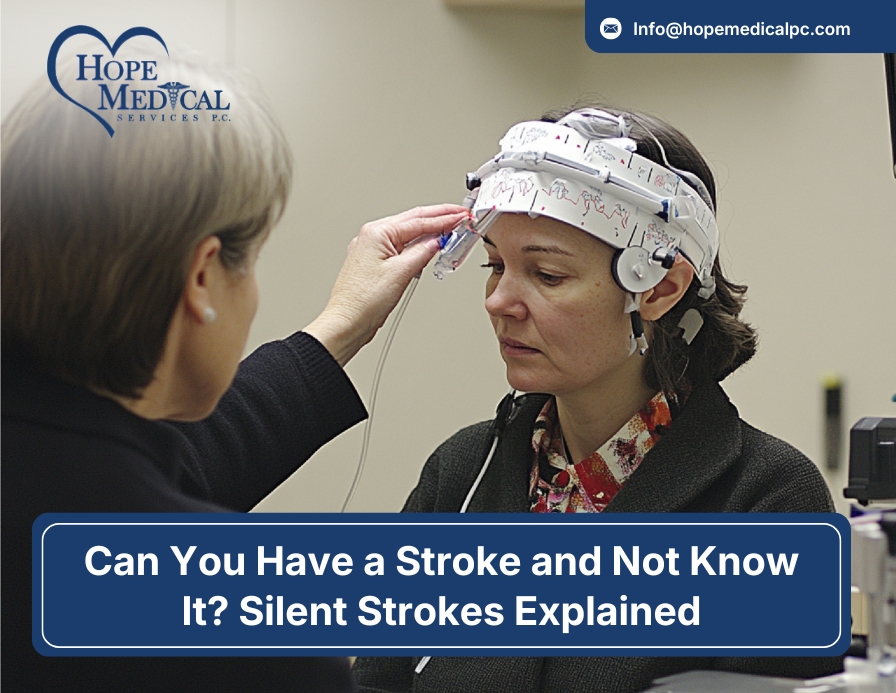
This is why neurologists often discover evidence of previous silent strokes during MRI scans ordered for entirely different reasons. The patient had no memory of any episode.
Can You Have a Stroke Without Symptoms? Understanding the Silent Warning
Can you have a stroke without symptoms? In the traditional sense, where symptoms mean collapse, facial drooping, or slurred speech, yes, it is entirely possible. But “without symptoms” does not mean without effects. Silent strokes do produce subtle changes, often noticed only in hindsight or identified through testing.
Subtle Signs That Are Often Ignored
- Sudden memory lapses: Forgetting familiar names, words, or recent events without explanation.
- Balance and coordination issues: Unexplained stumbling, clumsiness, or a subtle shift in walking gait.
- Mood and personality changes: Increased irritability, emotional flatness, or uncharacteristic behavior.
- Concentration difficulties: Trouble focusing, completing tasks, or following conversations.
- Mild headaches with no cause: Brief, unusual headaches that disappear quickly.
- Cognitive slowing: Processing information more slowly than usual, or struggling with reasoning.
These are easy to attribute to aging or lifestyle, which is exactly why so many silent strokes go unrecognized. Over time, however, repeated silent strokes compound and can lead to vascular dementia, a progressive decline in memory and thinking.
What Are the Symptoms of a Stroke? The Full Spectrum
Understanding what the symptoms of a stroke are is critical for early detection. Stroke symptoms range from the dramatic and unmistakable to the subtle and dismissible. Here is a full breakdown:
| Symptom | Type | What It Feels Like |
| Sudden facial drooping | Classic | One side of the face sags; the smile is uneven |
| Arm weakness or numbness | Classic | One arm drifts downward; can’t hold objects |
| Speech difficulty | Classic | Slurred, confused, or inability to speak |
| Severe sudden headache | Classic | Described as “the worst headache of my life.” |
| Vision loss or blurring | Classic | Sudden blindness or double vision in one/both eyes |
| Dizziness or loss of balance | Classic/Silent | Stumbling, vertigo, falling without cause |
| Unexplained confusion | Silent/Subtle | Disorientation, foggy thinking, brief confusion |
| Memory gaps | Silent | Short-term memory failure without explanation |
| Personality change | Silent | Irritability, emotional changes with no apparent cause |
| Sudden fatigue | Silent | Extreme tiredness unrelated to activity or sleep |
Do Strokes Hurt? A Question Many Are Afraid to Ask
Do strokes hurt? This is one of the most commonly searched and least clearly answered questions about strokes. The answer is: it depends on the type and location of the stroke.
- Hemorrhagic strokes (brain bleeds): These often cause a sudden, severe, explosive headache, the worst headache most people have ever experienced. This is sometimes called a “thunderclap headache” and is a medical emergency.
- Ischemic strokes (blockage): These are frequently painless. Because brain tissue itself has no pain receptors, the blockage of blood flow does not create a sensation of pain in many cases. This is a key reason why people fail to recognize an ischemic stroke in real time.
- Post-stroke pain: Some stroke survivors develop central post-stroke pain syndrome (CPSP), a neuropathic condition where the brain misinterprets signals and produces chronic burning, aching, or sharp pain sometimes weeks after the stroke event.
So while a stroke is not always painful during the event itself, it can cause long-term pain syndromes afterward. The absence of pain is not reassurance; it is often the reason strokes go unrecognized until it is too late.
How to Know If You Had a Stroke: Diagnosis and Detection
If you are asking how to know if you had a stroke, whether recently or in the past, medical imaging is the most definitive answer. Here are the steps that neurologists take:
One of the most important and often overlooked tools in this process is a Carotid Duplex Ultrasound. This non-invasive test uses sound waves to evaluate blood flow through the carotid arteries in the neck, which are a primary source of stroke-causing blockages. It can identify plaque buildup, narrowing, or other abnormalities long before a full stroke occurs, making it an essential step for anyone with multiple stroke risk factors or a history of TIAs.
Diagnostic Methods
| Method | What It Detects | Best For |
| MRI (Magnetic Resonance Imaging) | White matter lesions, old infarcts, and silent stroke evidence | Confirming past silent strokes |
| CT Scan | Bleeds, large clots, and acute stroke damage | Emergency stroke detection |
| Diffusion-Weighted MRI (DWI) | Acute ischemic lesions within hours | Recent stroke confirmation |
| Blood Tests | Clotting disorders, inflammation, and cholesterol | Understanding risk factors |
| Carotid Ultrasound | Artery blockages in the neck | Finding potential stroke sources |
| Echocardiogram | Heart-related clot sources | Cardiac causes of stroke |
Signs You Should Request a Stroke Evaluation
- You experienced unexplained memory lapses or sudden confusion
- You have a history of TIAs (transient ischemic attacks or “mini-strokes”)
- You have multiple cardiovascular risk factors: hypertension, diabetes, obesity, and smoking
- Family members have noticed personality or cognitive changes in you
- You experienced a brief episode of numbness, vision change, or coordination loss that resolved quickly
A TIA (transient ischemic attack) is particularly important to recognize. It produces stroke-like symptoms that typically last less than an hour and fully resolve, but it is a major warning sign that a full stroke is imminent. About 10 to 15 percent of people who have a TIA will experience a full stroke within three months if untreated.
Who Is Most at Risk for Silent or Unrecognized Strokes?
Not everyone faces the same risk. Certain populations are significantly more vulnerable to having strokes, including silent ones without knowing it. Understanding your risk profile is one of the most important steps in prevention.
| Risk Factor | Why It Matters | Relative Risk Level |
| High blood pressure (hypertension) | Damages small vessels throughout the brain | Very High |
| Atrial fibrillation (AFib) | Irregular heartbeat creates clots that travel to the brain | High |
| Type 2 Diabetes | Damages blood vessels and promotes inflammation | High |
| High cholesterol/atherosclerosis | Narrow arteries feeding the brain | High |
| Obesity | Linked to hypertension, diabetes, and inflammation | Moderate-High |
| Smoking | Damages vessel walls and promotes clot formation | High |
| Age over 55 | Vessel stiffness and plaque buildup increase with age | Moderate |
| Sleep apnea | Causes repeated oxygen drops during sleep | Moderate |
| Excessive alcohol use | Raises blood pressure and promotes AFib | Moderate |
| Family history of stroke | Genetic predisposition to vascular disease | Moderate |
It is also worth noting that peripheral artery disease (PAD), a condition where plaque narrows the arteries supplying blood to the legs and lower body, shares nearly identical risk factors with stroke and is a strong marker of system-wide vascular disease. Patients diagnosed with PAD are at significantly elevated risk for stroke and heart attack, making early diagnosis and treatment of PAD a critical part of overall cardiovascular protection.
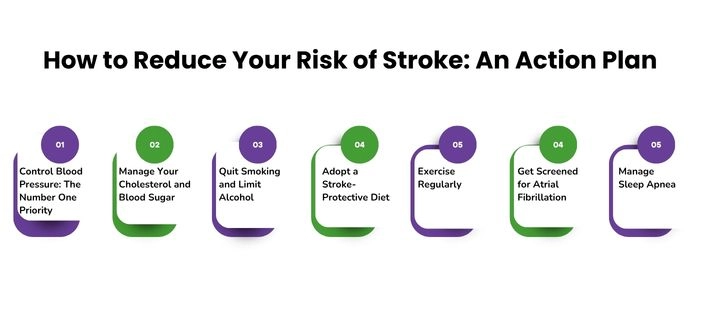
How to Reduce Your Risk of Stroke: An Action Plan
Learning how to reduce your risk of stroke is perhaps the most empowering response to this information. The good news is that up to 80 percent of strokes are preventable through lifestyle changes and medical management.
1. Control Blood Pressure: The Number One Priority
Hypertension is the leading modifiable risk factor for both silent and symptomatic strokes. Target a blood pressure reading below 130/80 mmHg. This requires regular monitoring, dietary changes (reducing sodium, eating more potassium-rich foods), physical activity, and medication if prescribed.
2. Manage Your Cholesterol and Blood Sugar
Atherosclerosis the narrowing of arteries by plaque, is directly linked to stroke risk. A diet low in saturated fats and trans fats, combined with statins if prescribed, can significantly reduce arterial plaque buildup. For those with diabetes, maintaining HbA1c below 7 percent dramatically lowers vascular risk.
If your levels remain elevated despite lifestyle changes, exploring expert Hyperlipidemia Treatment can provide a personalized, medically guided plan to restore healthy cholesterol balance and protect your arteries long-term
3. Quit Smoking and Limit Alcohol
Smoking doubles your risk of ischemic stroke. Quitting reduces this risk significantly within just two years. Alcohol, when consumed excessively, raises blood pressure and triggers atrial fibrillation, both key stroke drivers. Limiting intake to moderate levels (or eliminating it entirely) is strongly advised.
4. Adopt a Stroke-Protective Diet
- Mediterranean or DASH diet rich in vegetables, legumes, whole grains, fish, and olive oil
- Reduce processed foods, refined sugars, and red meat
- Aim for at least 5 servings of vegetables and fruits per day
- Include omega-3 fatty acids from fish, flaxseed, or walnuts
- Reduce sodium intake to below 1,500 mg per day
5. Exercise Regularly
Physical inactivity is a major independent risk factor for stroke. Aim for at least 150 minutes of moderate-intensity aerobic exercise per week, such as brisk walking, swimming, or cycling. Even 30 minutes a day has been shown to meaningfully reduce stroke risk.
6. Get Screened for Atrial Fibrillation
AFib can be silent and undiagnosed for years while dramatically increasing stroke risk. A routine ECG (electrocardiogram) can detect it. If diagnosed, anticoagulant therapy (blood thinners) can reduce AFib-related stroke risk by up to 70 percent.
7. Manage Sleep Apnea
Untreated sleep apnea significantly increases stroke risk through oxygen deprivation and its downstream effects on blood pressure and heart rhythm. CPAP therapy, weight management, and positional therapy are effective treatments.
When Should You See a Doctor Immediately?
Do not wait to see if symptoms pass. A TIA that resolves completely within an hour is still a stroke-level emergency. The window for effective intervention in a full ischemic stroke is narrow, with clot-busting treatment most effective within 3 to 4.5 hours of symptom onset. Delayed response is the most common reason for preventable stroke disability.
Schedule a Non-Emergency Evaluation If:
- You have multiple uncontrolled stroke risk factors (hypertension, diabetes, high cholesterol)
- You are over 55 and have never had a neurological or cardiovascular screening
- You have noticed gradual memory or cognitive changes over weeks or months
- A close family member was diagnosed with a stroke before age 65
- You have been told you have an irregular heartbeat
Final Thoughts
Silent strokes are real, common, and cumulatively dangerous. The brain absorbs damage quietly until it can’t anymore. By the time a major stroke strikes, there may already be years of accumulated silent injury in the brain’s architecture.
Signs of having a stroke are not always the dramatic collapse scenes depicted in films. They can be a moment of confusion that passes, a brief spell of dizziness, or a memory that seems a little less sharp than before. These quiet signals deserve attention, not dismissal, and if any of them sound familiar, Hope Medical can help you find answers. Understanding what the symptoms of a stroke are, both the obvious and the subtle, is the first step.
Medical Disclaimer
This article is for informational purposes only and should not replace professional medical advice, diagnosis, or treatment. If you experience sudden neurological symptoms, seek emergency medical attention immediately.