Food is medicine when your heart is struggling to keep up. A well-planned diet plan for heart failure patients does more than manage weight; it reduces fluid buildup, lowers blood pressure, and eases the workload on a weakened heart. Combined with the right medical care, such as congestive heart failure treatment, a heart-healthy diet is one of the most powerful tools a patient can use every single day.
You will get to know what to eat, what to avoid, and how to build a sustainable meal plan you can actually stick with long-term. Whether you were recently diagnosed or have been managing heart failure for years, the goal of this diet is the same: reduce the strain on your heart by controlling sodium and fluid, while still eating meals that are satisfying and nourishing.
Why Diet Matters for Heart Failure Patients
When the heart cannot pump efficiently, the body retains sodium and fluid to compensate; this raises blood pressure and forces the heart to work harder. A targeted heart failure diet interrupts this cycle by controlling three variables directly:
- Sodium intake: the primary driver of fluid retention and swelling
- Fluid volume: excess fluid raises pressure on the heart and lungs
- Overall heart-healthy nutrition supports blood pressure, cholesterol, and weight management
Studies consistently show that patients who follow a low-sodium, heart-healthy eating pattern experience fewer hospital readmissions and better symptom control than those who do not. In fact, dietary sodium and fluid mismanagement are among the leading preventable causes of heart failure hospital admissions, which makes daily food choices just as important as taking prescribed medication on schedule.
Core Principles of a Heart Failure Diet
Before diving into specific foods, it helps to understand the four pillars every heart failure diet plan is built on:
- Limit sodium to 1,500–2,000 mg per day (your cardiologist will set your exact target)
- Monitor fluid intake if your doctor has placed you on a fluid restriction
- Choose lean proteins, whole grains, and plenty of vegetables over processed foods
- Maintain a healthy, stable weight and track daily weight changes for sudden fluid gain
These principles are not meant to be followed perfectly overnight. Most cardiologists recommend making one or two changes at a time.
Low-Sodium Diet for Heart Failure
A low-sodium diet for heart failure is the single most important dietary change most patients make. Sodium causes the body to hold onto water, which increases blood volume and strains the heart. The table below shows general daily sodium targets; always confirm your specific limit with your cardiologist.
| Heart Failure Stage | Typical Daily Sodium Limit | Practical Focus |
| Mild (Stage A/B) | 2,000–2,300 mg/day | Avoid added table salt; limit processed foods |
| Moderate (Stage C) | 1,500–2,000 mg/day | Cook fresh meals; read every food label |
| Advanced (Stage D) | As low as 1,500 mg/day | Work closely with a dietitian; avoid all hidden sodium sources |
Tips to Make a Low-Sodium Diet Taste Better
Cutting sodium does not mean cutting flavor. These simple swaps make low-sodium meals satisfying:
- Rinse canned vegetables and beans under water to remove up to 40% of added sodium
- Cook with fresh garlic, onion, ginger, and citrus zest instead of salt
- Make your own salad dressings and marinades using olive oil, vinegar, and herbs
- Roast or grill vegetables to bring out natural sweetness without added salt
- Use a sodium-free seasoning blend instead of table salt at the dinner table
Best Foods for Heart Failure Patients
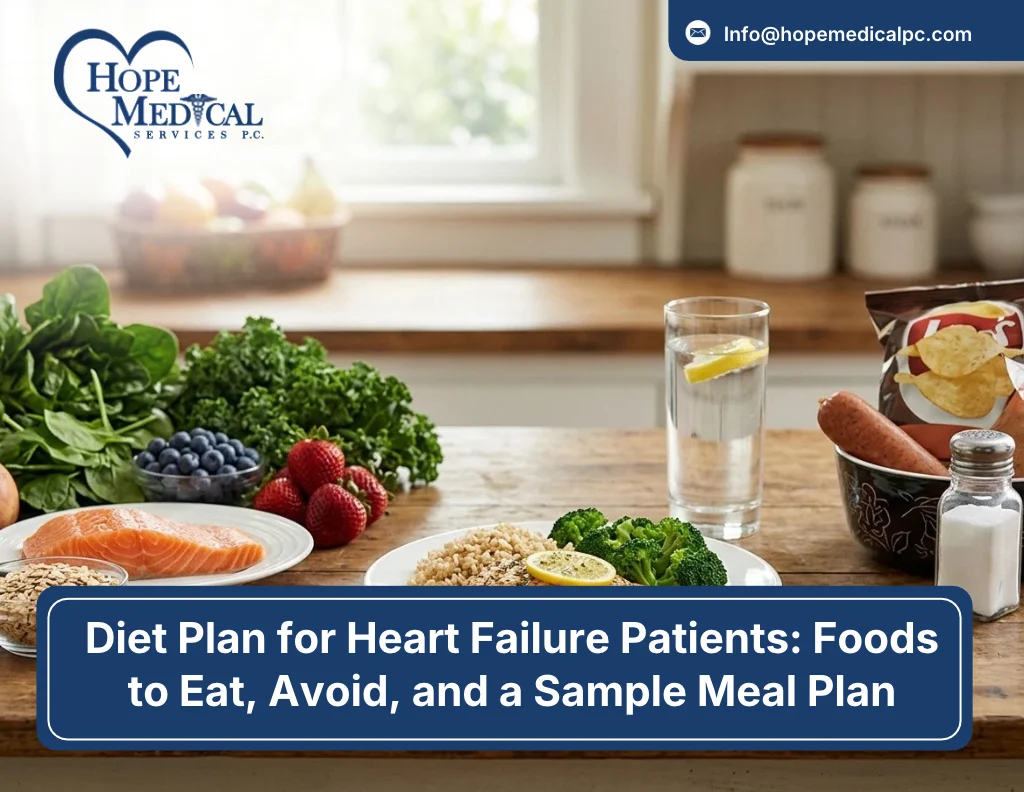
The best foods for heart failure patients are naturally low in sodium, rich in potassium and fiber, and free of added preservatives. Building meals around these food groups supports heart function without sacrificing flavor.
| Food Group | Examples | Why It Helps |
| Fresh vegetables | Spinach, broccoli, carrots, bell peppers | Low sodium, high potassium and fiber |
| Fresh fruits | Berries, apples, oranges, bananas | Natural sweetness without added sodium |
| Whole grains | Oats, brown rice, quinoa, whole-wheat bread (low-sodium) | Steady energy and fiber, low in sodium |
| Lean proteins | Skinless chicken, fish, egg whites, legumes | Supports muscle without excess saturated fat |
| Low-fat dairy | Unsalted low-fat milk, yogurt | Calcium and protein with less sodium than cheese |
| Healthy fats | Olive oil, avocado, unsalted nuts | Supports cholesterol and blood vessel health |
| Herbs & spices | Garlic, basil, pepper, lemon juice | Adds flavor without reaching for the salt shaker |
Foods to Avoid With Heart Failure
Knowing which foods to avoid with heart failure is just as important as knowing what to eat. Many everyday foods carry hidden sodium and unhealthy fats that quietly undo progress, even when they don’t taste particularly salty. A single fast-food meal or bowl of canned soup can contain more sodium than an entire day’s recommended limit, which is why label-reading and meal planning matter so much.
| Food Category | Examples to Limit or Avoid | Reason |
| Processed & packaged foods | Canned soups, frozen dinners, deli meats | Very high hidden sodium content |
| Salty snacks | Chips, pretzels, salted nuts, crackers | Concentrated sodium in small servings |
| Condiments & sauces | Soy sauce, ketchup, salad dressings, pickles | Sodium adds up quickly per serving |
| Fast food & restaurant meals | Burgers, fries, pizza | High sodium, saturated fat, and portion sizes |
| Cured & smoked foods | Bacon, sausage, ham, smoked fish | High sodium and saturated fat |
| Alcohol | Beer, wine, spirits | Can weaken heart muscle and interact with medications |
| Sugary beverages | Soda, sweetened juices, energy drinks | Contributes to weight gain and fluid imbalance |
Sample Diet Plan for Heart Failure Patients (1-Day Menu)
Here is a sample, low-sodium diet plan for heart failure patients. Portion sizes and sodium totals should always be personalized with your care team or a registered dietitian.
| Meal | Menu Example | Sodium-Smart Tip |
| Breakfast | Plain oatmeal with fresh berries and unsalted walnuts | Skip instant flavored packets; they’re high in sodium |
| Snack | Sliced apple with unsalted peanut butter | Choose unsalted nut butter varieties |
| Lunch | Grilled chicken salad with olive oil and lemon dressing | Use fresh lemon juice instead of bottled dressing |
| Snack | Plain low-fat yogurt with a handful of berries | Avoid flavored yogurts with added sugar |
| Dinner | Baked salmon, steamed broccoli, and brown rice | Season with herbs, garlic, and pepper instead of salt |
| Evening | Herbal tea or water with lemon | Track total fluids if you’re on a fluid restriction |
Fluid Intake Guidelines
Not every heart failure patient needs to restrict fluids, but many with moderate to advanced heart failure do. If your cardiologist has set a fluid limit, these habits help you stay on track:
- Measure fluid in a marked container so you can track total daily intake accurately
- Remember that soup, ice, gelatin, and popsicles all count as fluids
- Sip small amounts throughout the day rather than large amounts at once
- Weigh yourself each morning; a gain of 2–3 lbs in a day or 5 lbs in a week can signal fluid retention and should be reported to your doctor.
Keeping a simple daily log of weight, fluid intake, and any swelling can make appointments with your cardiologist far more productive, since patterns are easier to spot on paper than from memory alone.
Lifestyle Habits That Support Your Heart Failure Diet
Diet works best as part of a complete heart-healthy routine. Pairing your meal plan with these habits amplifies results:
- Stay physically active within the limits set by your cardiologist
- Track daily weight and symptoms to catch fluid buildup early
- Take medications exactly as prescribed and never skip doses
- Get consistent, quality sleep to support heart recovery
- Limit alcohol and avoid tobacco products entirely
- Attend all scheduled cardiology follow-ups, even when symptoms feel stable
For a broader look at habits that protect your heart long-term, read our guide on a heart-healthy lifestyle, and learn more about how prescribed medications work alongside diet in our breakdown of heart failure medications.
When to Talk to Your Cardiologist
Diet alone cannot replace medical management. It’s important to contact your care team promptly if you notice sudden weight gain, swelling in the legs or abdomen, or increased shortness of breath, as these can signal fluid buildup that needs attention.
Persistent fatigue despite following your diet plan, difficulty maintaining your sodium or fluid targets, or any new or worsening symptoms of congestive heart failure are also signs that it’s time to check in rather than wait for your next scheduled visit.
Our team at Hope Medical Services offers comprehensive congestive heart failure treatment, including personalized nutrition guidance, along with remote patient monitoring so we can track your weight, symptoms, and vitals between visits. If cholesterol management is also part of your care plan, our hyperlipidemia treatment services work hand-in-hand with dietary changes to support your overall heart health.
Final Thoughts
A heart failure diet is not about restriction for its own sake; it is about giving your heart the best possible conditions to function. Lowering sodium, choosing whole foods, watching fluid intake, and staying consistent can meaningfully reduce symptoms and hospital visits. Pair your diet plan with regular cardiology care for the best long-term outcome.
Every patient’s heart failure diet plan should be tailored to their stage of disease, kidney function, and other medical conditions such as diabetes. What works for one patient may need adjustment for another, which is why ongoing guidance from a cardiologist and dietitian remains the safest path forward.
FAQs
Q1. What is the best diet plan for heart failure patients?
The best diet plan for heart failure patients centers on low sodium (typically 1,500–2,000 mg per day), fresh vegetables and fruits, lean proteins, whole grains, and limited fluids when advised by a cardiologist.
Q2. How much sodium should a heart failure patient eat per day?
Most cardiologists recommend 1,500–2,000 mg of sodium per day, though the exact limit depends on the stage of heart failure and should be confirmed with your care team.
Q3. What foods should be avoided with heart failure?
Avoid processed and canned foods, salty snacks, cured meats, fast food, high-sodium condiments, alcohol, and sugary beverages, as these contribute to fluid retention and added strain on the heart.
Q4. Can diet alone reverse heart failure?
No. Diet is a critical part of management, but it works alongside prescribed medications and regular cardiology care; it does not replace medical treatment.
Q5. Are salt substitutes safe for heart failure patients?
Many salt substitutes contain potassium chloride, which can be unsafe for patients on certain heart failure medications or with kidney issues. Always check with your cardiologist before using a salt substitute.