Heart disease remains the leading cause of death in the United States, and one of the most dangerous things about it is how quietly it can progress. Not every warning sign looks like the crushing chest pain shown in movies. Sometimes a struggling heart shows up as unusual tiredness, a dull ache in the jaw, or breathlessness after climbing a single flight of stairs.
Because these signs are easy to dismiss as “just stress” or “getting older,” many people don’t realize their heart is in trouble until the disease has already progressed.
Recognizing heart disease symptoms early can be the difference between a manageable diagnosis and a medical emergency.
What’s Actually Happening Inside an Unhealthy Heart?
Most heart problems trace back to one of four underlying issues, and the symptoms a person experiences usually depend on which one is at play:
- Blocked blood flow: plaque builds up inside the coronary arteries, narrowing the space blood can pass through (coronary artery disease).
- A weakened pump: the heart muscle can’t push blood efficiently, causing fluid to back up in the lungs, legs, and abdomen (heart failure).
- Electrical misfires: the heart’s rhythm becomes too fast, too slow, or irregular (arrhythmia).
- Structural damage: a valve doesn’t open or close properly, disrupting normal blood flow (valve disease).
Understanding which mechanism is behind a symptom helps explain why heart disease can feel so different from one person to the next.
Common Heart Disease Symptoms You Shouldn’t Ignore
These are the classic signs of heart disease most people associate with heart trouble. Even mild or occasional versions of these symptoms are worth mentioning to a doctor.
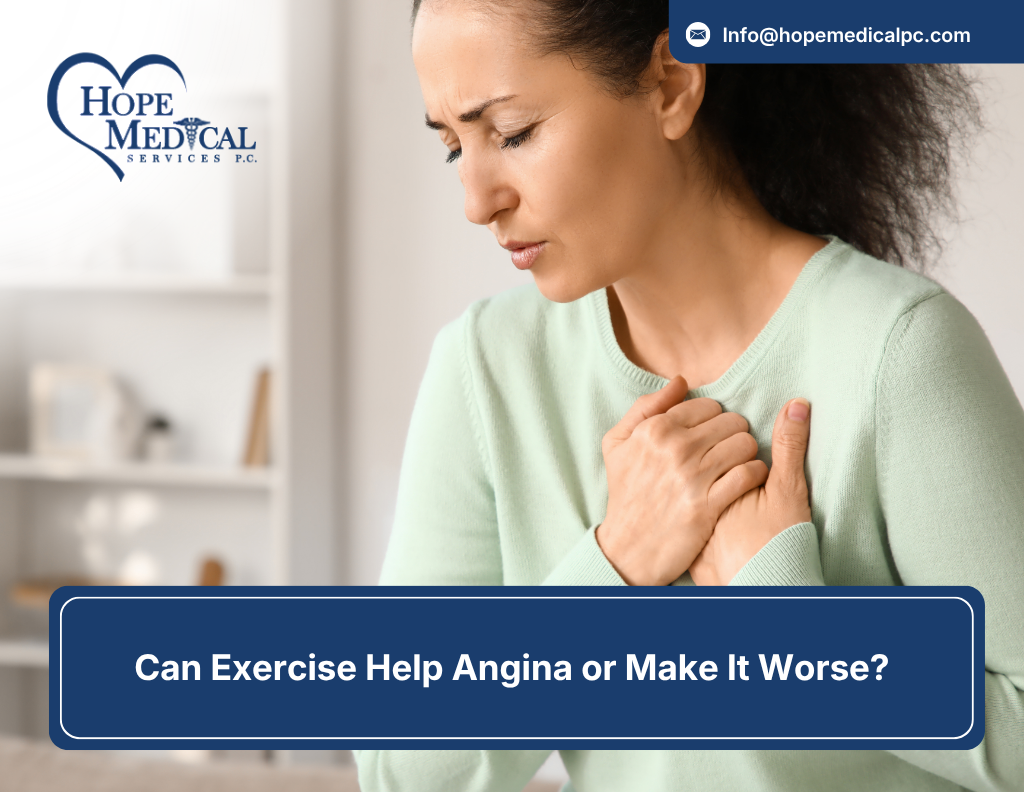
- Chest pain, pressure, or tightness (angina) often described as squeezing or a heavy weight on the chest.
- Shortness of breath during activity or, in more advanced cases, even at rest.
- Persistent fatigue tiredness that doesn’t improve with rest or sleep.
- Heart palpitations a racing, pounding, or fluttering heartbeat.
- Swelling in the legs, ankles, or feet a sign the heart isn’t pumping fluid efficiently.
- Dizziness or lightheadedness, especially when standing up or during exertion.
- Pain radiating to the arm, jaw, neck, or back a hallmark warning sign of a heart attack.
- Cold sweats breaking out in a sweat without physical exertion or heat.
- A persistent cough or wheeze sometimes producing white or pink-tinged mucus, linked to fluid buildup in the lungs.
- Nausea or indigestion-like discomfort frequently mistaken for a stomach issue, especially in women.
Symptoms of a Bad Heart: Subtle Signs vs. Emergency Signs
Early and Subtle Warning Signs
Early heart problems often whisper rather than shout. These signs are easy to brush off, but they’re worth tracking over time:
- Getting winded faster than usual during everyday activities
- Feeling unusually drained by the afternoon, even after a full night’s sleep
- Occasional skipped or fluttering heartbeats
- Ankles or shoes feeling tighter by the end of the day
- Reduced stamina for exercise you used to handle easily
- Loud snoring or pauses in breathing during sleep
Emergency Symptoms That Need Immediate Care
The symptoms below should never be “waited out.” They can signal a heart attack or another life-threatening event in progress.
| Symptom | What It May Indicate | What To Do |
| Crushing chest pressure lasting more than a few minutes | Possible heart attack | Call 911 immediately |
| Sudden, severe shortness of breath | Acute heart failure or blood clot | Seek emergency care now |
| Fainting or loss of consciousness | Dangerous arrhythmia | Call 911 immediately |
| Chest pain radiating to the arm, jaw, or back with sweating | Classic heart attack pattern | Call 911 immediately |
| Rapid or irregular heartbeat with dizziness | Arrhythmia affecting blood flow | Seek emergency care now |
Silent Signs of an Unhealthy Heart Many People Overlook
Some of the most telling unhealthy heart signs don’t feel like a “heart” problem at all. These are often the ones patients only connect to their heart after a diagnosis:
- Unexplained fatigue that lingers for weeks without an obvious cause.
- Puffy ankles by evening that go down again overnight.
- Trouble sleeping flat, needing extra pillows to breathe comfortably (orthopnea).
- Erectile dysfunction in men, which can be an early marker of blood vessel disease.
- Gum disease or chronic inflammation, which research links to higher cardiovascular risk.
- Frequent heartburn-like discomfort that doesn’t respond to antacids.
- Cold hands and feet or leg pain while walking, both tied to poor circulation.
Heart Disease Symptoms in Men vs. Women
Heart disease doesn’t always look the same in every patient. Women, in particular, are more likely to experience symptoms that are subtler and easier to mistake for another condition, which is part of why heart disease is sometimes diagnosed later in women than in men.
| More Common in Men | More Common in Women |
| Intense, crushing chest pain | Milder chest discomfort or pressure sometimes absent altogether |
| Pain radiating down the left arm | Unusual fatigue that builds over days |
| Cold sweats with chest pain | Nausea, indigestion, or stomach discomfort |
| Sudden collapse as a first symptom | Shortness of breath without chest pain |
| Symptoms during physical exertion | Jaw, neck, or upper back pain |
Heart Problems Explained by Type: What Each One Feels Like
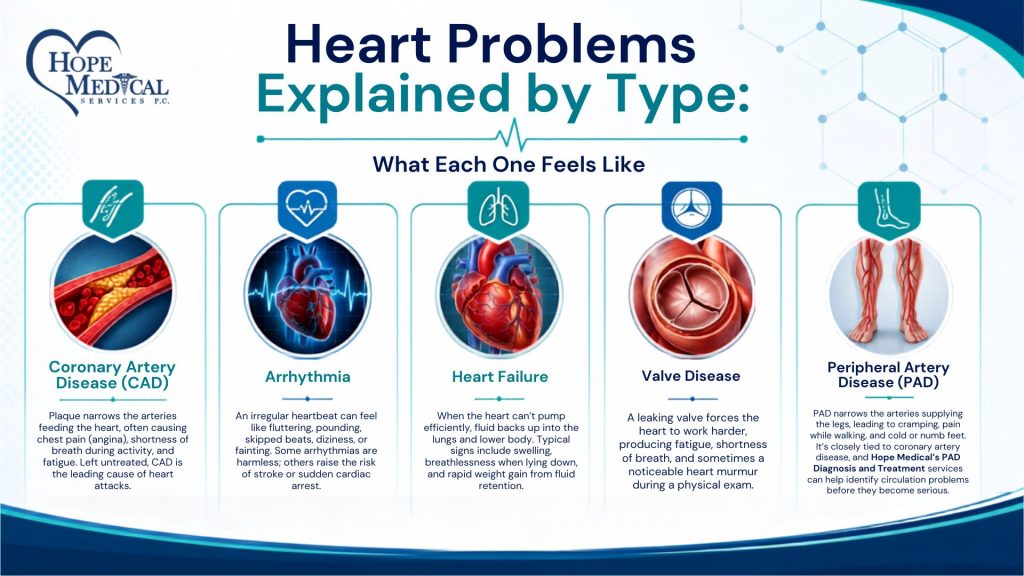
- Coronary Artery Disease (CAD)
Plaque narrows the arteries feeding the heart, often causing chest pain (angina), shortness of breath during activity, and fatigue. Left untreated, CAD is the leading cause of heart attacks.
- Arrhythmia
An irregular heartbeat can feel like fluttering, pounding, skipped beats, dizziness, or fainting. Some arrhythmias are harmless; others raise the risk of stroke or sudden cardiac arrest.
- Heart Failure
When the heart can’t pump efficiently, fluid backs up into the lungs and lower body. Typical signs include swelling, breathlessness when lying down, and rapid weight gain from fluid retention.
- Valve Disease
A leaking or stiff valve forces the heart to work harder, producing fatigue, shortness of breath, and sometimes a noticeable heart murmur during a physical exam.
- Peripheral Artery Disease (PAD)
PAD narrows the arteries supplying the legs, leading to cramping, pain while walking, and cold or numb feet. It’s closely tied to coronary artery disease, and Hope Medical’s PAD Diagnosis and Treatment services can help identify circulation problems before they become serious.
What Increases Your Risk of Heart Problems?
Symptoms don’t appear randomly; they tend to show up faster and more severely in people with certain risk factors, including:
- Family history of heart disease
- High blood pressure
- High cholesterol or triglycerides
- Diabetes or insulin resistance
- Smoking or tobacco use
- Obesity or a sedentary lifestyle
- Chronic stress or poor sleep
- Age risk rises after 45 in men and 55 in women
How Are Heart Disease Symptoms Diagnosed?
Because so many heart problems share overlapping symptoms, self-diagnosis isn’t reliable. A cardiologist typically starts with a physical exam and a review of symptoms and risk factors, then narrows down the cause using targeted testing such as blood work, an EKG, or imaging.
One of the most common starting points is an Echocardiogram Test, a painless ultrasound of the heart that shows how well the heart muscle is pumping, how the valves are functioning, and whether any structural issues are contributing to your symptoms. It’s often the fastest way to turn a list of symptoms into a clear answer.
Final Thoughts
Heart disease symptoms rarely arrive as a single dramatic event. More often, they build gradually: a little more fatigue, a little more breathlessness, a little more swelling until the body can no longer compensate. Learning to recognize these signs of heart disease early gives you and your doctor the best chance to intervene before a routine symptom becomes an emergency.
If you’ve noticed any of the signs discussed above, don’t wait for them to get worse. The team at Hope Medical Services provides comprehensive cardiology and vascular care across two convenient Queens, NY locations, combining advanced diagnostics with personalized treatment plans so every patient leaves with real answers, not just guesses.
FAQs
Q1.Can heart disease symptoms come and go?
Yes. Many heart conditions, especially arrhythmias and early-stage heart failure, cause symptoms that appear intermittently rather than constantly. Intermittent symptoms are still worth reporting to a doctor, since patterns over time help pinpoint the cause.
Q2. What does a mild heart attack feel like?
A mild or “silent” heart attack can feel like brief chest discomfort, unusual fatigue, or flu-like symptoms rather than severe pain. Some people mistake it for indigestion and don’t realize a heart attack occurred until a later test shows heart muscle damage.
Q3. Can anxiety mimic heart disease symptoms?
Anxiety and panic attacks can cause chest tightness, a racing heart, and shortness of breath that closely resemble cardiac symptoms.
Q4. How long can you have heart disease without knowing?
It’s possible to have coronary artery disease or early heart failure for years before symptoms become noticeable, since the heart and blood vessels can compensate for gradual changes.
Q5. Are heart disease symptoms different in older adults?
Older adults are more likely to experience atypical symptoms such as confusion, weakness, or loss of appetite instead of classic chest pain, which can delay diagnosis.