If your healthcare provider has recommended a carotid ultrasound, you may naturally feel a surge of worry. However, it is crucial to understand that this test is a powerful, non-invasive tool designed to give you and your cardiovascular specialist a clear picture of your arterial health.
Rather than being a reason for panic, ordering this scan is a proactive step your provider takes to educate you about your body and guide a personalized plan for prevention.
Let’s demystify the carotid ultrasound, exploring what it is, what it reveals, and why it is considered one of the safest and most effective steps in modern cardiovascular care.
What Exactly Is a Carotid Ultrasound?
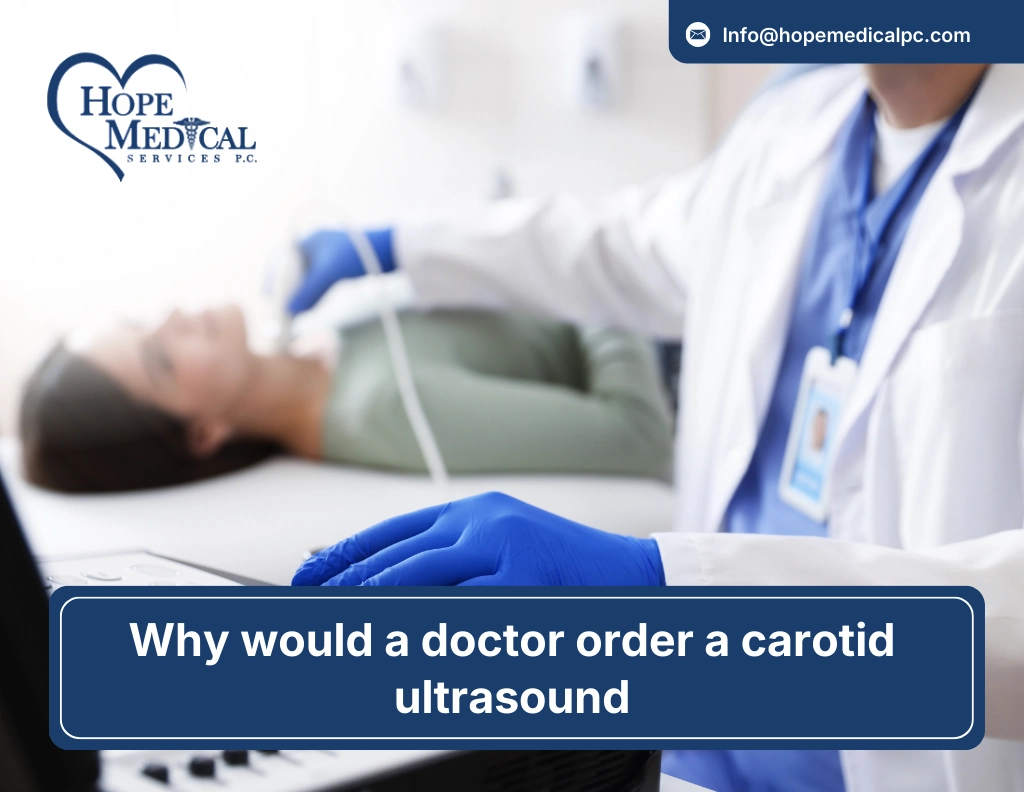
A carotid ultrasound, often called a carotid duplex scan, is a painless and safe imaging procedure that uses high-frequency sound waves to create live images of the carotid arteries in your neck.
These two large arteries run on either side of your neck and are responsible for supplying essential, oxygen-rich blood directly to your brain. Keeping them clear is vital for preventing one of the most serious health events: a stroke.
The test utilizes a specialized technique called Doppler imaging. While the standard ultrasound creates images of the structure, the Doppler component tracks the speed and direction of blood flow. This dual approach provides comprehensive information about both the artery walls and the flow within them.
Non-Invasive and Safe
One of the most important facts to remember is that this test is completely non-invasive. It does not use radiation (unlike X-rays or CT scans) and does not require needles or injections. It is comparable to a pregnancy ultrasound—simple, safe, and external
The Primary Reason: Finding Clues for Stroke Prevention
The single most important reason why would a doctor order a carotid ultrasound is to assess your risk of stroke by checking for a condition called Carotid Artery Disease (CAD), or stenosis.
The Problem: Plaque Buildup
The test is primarily looking for atherosclerosis, which is the buildup of a sticky substance called plaque (made of cholesterol, fat, and other materials) on the inside walls of the carotid arteries.
What does a carotid ultrasound show? It provides answers to three critical questions:
- Is Plaque Present? It visualizes the buildup of plaque on the artery walls.
- How Narrowed is the Artery? It measures the degree of blockage (stenosis), which is crucial for determining treatment.
- Is Blood Flow Restricted? Using the Doppler, it measures if the flow is being slowed down or disturbed by the plaque.
If a piece of this plaque breaks off and travels up to the brain, it can block a smaller artery, causing an ischemic stroke. Therefore, detecting and measuring this plaque is the first step in effective stroke prevention.
Urgent Diagnostic Needs: When Symptoms Occur
The most immediate reason a healthcare provider orders a carotid ultrasound is when a patient experiences specific warning signs related to restricted blood flow. If you experience any of the following symptoms suddenly, seek medical attention immediately, as a carotid scan may be needed quickly:
- Transient Ischemic Attack (TIA), or “Mini-Stroke”: This is a temporary episode where blood flow to the brain is briefly blocked. Symptoms come on suddenly but usually resolve within minutes to hours (under 24 hours).
- Sudden Weakness or Numbness: Affecting one side of the face, arm, or leg.
- Sudden Vision Loss: Typically in one eye, described as a curtain coming down or temporary blindness (Amaurosis Fugax).
- Difficulty Speaking: Sudden slurred speech, garbled words, or difficulty understanding others.
- Dizziness or Loss of Balance: Severe, unexplained lightheadedness or difficulty with coordination.
In these cases, the ultrasound is is a carotid ultrasound necessary to urgently determine if plaque in the carotid artery is the cause, allowing doctors to plan immediate, life-saving intervention.
Screening Needs: Identifying High-Risk Patients
For patients who have not experienced symptoms, the test serves as a critical screening tool. Your provider may order a carotid ultrasound if you have significant risk factors for cardiovascular disease.
This proactive approach is key to stopping a problem before it starts. The main risk factors that prompt a screening ultrasound include:
- High Blood Pressure (Hypertension): Damages artery walls, promoting plaque formation.
- High Cholesterol: Contributes to the fatty buildup of plaque.
- Diabetes: Accelerates the development of atherosclerosis throughout the body.
- Age: Risk increases significantly after age 65 for women and age 75 for men.
- Family History: A close relative (parent, sibling) who has had a stroke or heart disease.
- Tobacco Use: Smoking dramatically increases the rate of plaque buildup.
- A Carotid Bruit: A specific, unusual “whooshing” sound your provider hears over your neck with a stethoscope, indicating turbulent blood flow.
Preparation and Procedure: How Long Does a Carotid Ultrasound Take?
It is important to remember that the procedure is simple and stress-free.
Preparation
- No special diet or fasting is required.
- Simply wear a comfortable, loose-fitting shirt that allows easy access to your neck.
- Remove any necklaces or large earrings.
The Procedure
The test is performed by a specialized technician (sonographer) while you lie comfortably on your back.
- Gel Application: A warm, water-based gel is applied to the sides of your neck. This gel helps the sound waves travel.
- Scanning: The sonographer gently moves a small, handheld device (transducer) across the gelled area. You will feel light pressure.
- Doppler Sounds: You may hear a pulsing or whooshing sound from the machine. This is normal and simply the Doppler effect measuring your blood flow.
The entire procedure is quick. How long does a carotid ultrasound take? Typically, the scan itself takes only 30 to 45 minutes. You can resume your normal activities immediately afterward.
Interpreting the Results: Normal vs. Abnormal
Once the images are captured, a cardiologist or radiologist will review and interpret them.
Normal vs. Abnormal
- Normal Result: Shows clear, unrestricted blood flow through the arteries.
- Abnormal Result: Indicates the presence of plaque and measures the degree of stenosis (narrowing). The blockage is usually expressed as a percentage.
Treatment Based on Severity
How accurate is carotid artery ultrasound? It is considered highly accurate, making it the preferred screening tool. Treatment is determined by the percentage of blockage and whether you have had symptoms:
- Mild Blockage (Less than 50%): Management focuses on aggressive lifestyle changes (diet, exercise, quitting smoking) and medication to control blood pressure and cholesterol.
- Severe Blockage (Over 70%): Or a blockage over 50% accompanied by TIA/stroke symptoms. This may require an interventional procedure to clear the artery, such as:
- Carotid Endarterectomy: Surgical removal of the plaque.
- Carotid Stenting: Placing a small mesh tube to hold the artery open.
Key Takeaway:
The carotid ultrasound is not a penalty; it is an invaluable health checkup. Whether ordered due to symptoms or simply as a proactive screening, it provides the precise, non-invasive information your cardiovascular team needs to manage your health and, most importantly, prevent a future stroke.
If you have risk factors or unexplained symptoms, do not delay. Knowing the status of your carotid arteries is the first and best step toward a healthier life.
Take Control of Your Health Today
If you are concerned about your stroke risk factors, have experienced any warning symptoms, or need clarity on a recent recommendation for a carotid ultrasound, it’s time to speak with a specialist.
Consult a Cardiologist to discuss whether a carotid ultrasound is right for you and to create a tailored plan for maintaining optimal cardiovascular health.
FAQs
- What are symptoms of carotid artery blockage?
Symptoms can include sudden weakness, numbness on one side of the body, or temporary vision loss. - How long does a carotid artery ultrasound take?
A carotid artery ultrasound typically takes about 30 to 45 minutes to complete.
- What are the risks of a carotid ultrasound?
A standard carotid ultrasound is a safe, non-invasive test with no associated risks or side effects.
- What is the fastest way to tell if you have blocked arteries?
A carotid ultrasound is one of the fastest and safest ways to non-invasively check for blocked carotid arteries.