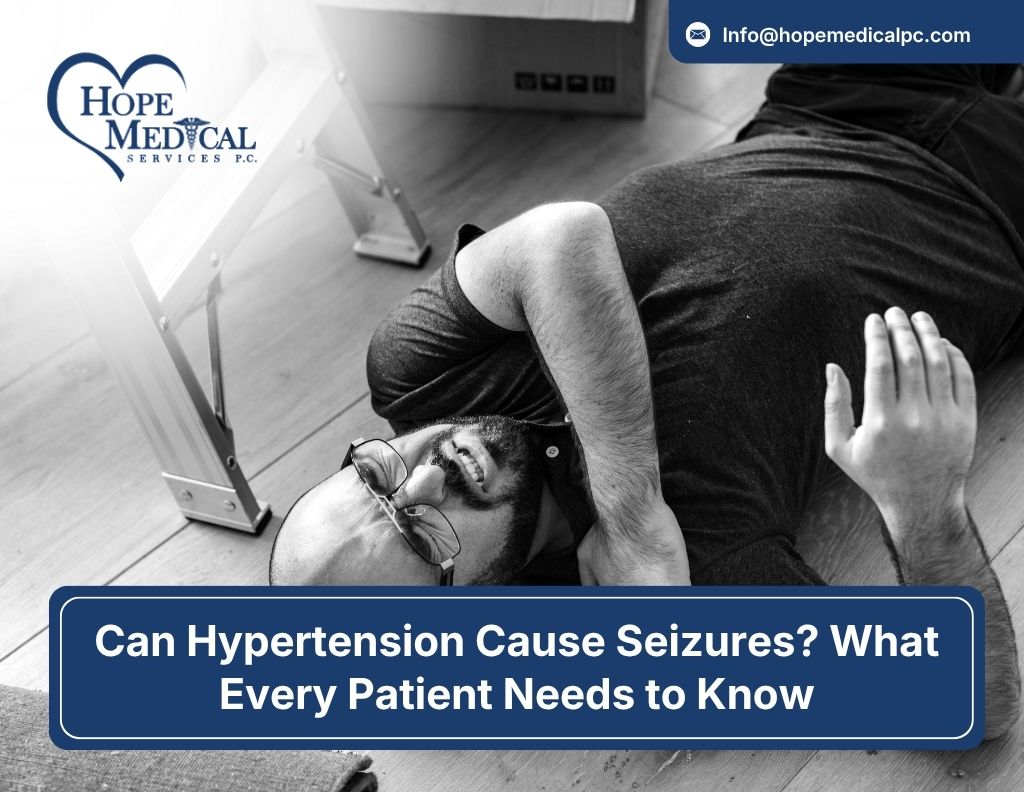
When most people think about high blood pressure, they picture heart attacks or strokes, not seizures. But the connection between hypertension and neurological events is both real and profoundly misunderstood. So, can hypertension cause seizures? The short answer is yes, under certain conditions, dangerously elevated blood pressure can trigger seizures, sometimes without any prior warning.
How high blood pressure affects the brain, what conditions make seizures more likely, and what steps you can take to protect yourself or someone you love. Whether you are managing chronic hypertension or concerned about a recent diagnosis, understanding these risks can be lifesaving.
Understanding Hypertension
Hypertension, or high blood pressure, is a chronic medical condition in which the force of blood against artery walls is consistently too high. Blood pressure is measured in millimeters of mercury (mmHg) and recorded with two numbers:
- Systolic pressure (top number): The pressure when your heart beats.
- Diastolic pressure (bottom number): The pressure when your heart rests between beats.
Hypertension is often called the ‘silent killer’ because it rarely causes symptoms in its early stages. Yet over time, it damages blood vessels, strains the heart, and, critically for today’s topic, exerts enormous stress on the brain.
How High Blood Pressure Affects the Brain
The brain is an extraordinarily sensitive organ. It accounts for roughly 2% of body weight but receives about 20% of the body’s blood supply. Any disruption to that blood flow or to the pressure within the cerebral vessels can have serious consequences.
Here is how chronic and acute hypertension damages the brain over time:
1. Damage to cerebral blood vessels
Sustained high pressure causes small arteries in the brain to thicken and narrow, a process called arteriolosclerosis. This reduces blood flow and oxygen delivery to brain tissue.
2. Increased stroke risk
Hypertension is the single most modifiable risk factor for stroke, both ischemic (clot-based) and hemorrhagic (bleeding-based).
3. White matter lesions
Chronic high blood pressure causes lesions in the brain’s white matter, which are linked to cognitive decline, mood disorders, and seizure susceptibility.
4. Blood-brain barrier disruption
In acute hypertensive events, the blood-brain barrier, the protective filter between the bloodstream and brain tissue, can break down. This allows fluid and proteins to leak into the brain, causing swelling and neurological dysfunction.
5. Cerebral edema
Brain swelling (edema) caused by uncontrolled blood pressure can compress neurons, trigger abnormal electrical activity, and lead to seizures.
Can Hypertension Directly Cause Seizures?
This is the core question. The answer is nuanced: hypertension itself is not classified as a direct cause of seizures in routine clinical medicine. However, high blood pressure and seizures are linked through several well-defined pathways, particularly when blood pressure reaches extreme levels or when it causes specific brain conditions.
What Is Hypertensive Encephalopathy?
Hypertensive encephalopathy is a serious, potentially life-threatening condition that develops when blood pressure rises so rapidly and severely that the brain’s ability to regulate its own blood flow is overwhelmed. This condition is one of the primary answers to the question: Can high blood pressure trigger seizures?
How It Happens
Normally, the brain auto-regulates blood flow to maintain a stable environment for neurons. When blood pressure spikes beyond a critical threshold, typically above 180/120 mmHg, this autoregulation fails. Blood rushes into the brain with excessive force, causing:
- Vasogenic edema (fluid leaking into brain tissue)
- Cerebral swelling (brain edema)
- Disruption of normal neuronal signaling
- Potential for seizures, confusion, or coma
Symptoms of Hypertensive Encephalopathy
| Symptom | Clinical Note |
| Severe headache | Sudden onset |
| Vision changes/blurring | Often accompanies BP > 180/120 |
| Confusion or disorientation | Gradual over hours/days |
| Nausea and vomiting | May mimic stroke symptoms |
| Seizures (in severe cases) | Requires emergency care |
| Loss of consciousness | Reversible if treated quickly |
Hypertensive encephalopathy is a medical emergency. If treated promptly with blood-pressure-lowering medications, the brain swelling is often reversible. If left untreated, it can lead to permanent brain damage, stroke, or death.
When Can a Hypertensive Crisis Lead to Seizures?
A hypertensive crisis is defined as blood pressure above 180/120 mmHg. It falls into two categories:
- Hypertensive urgency: Extremely high BP without acute organ damage. Requires rapid medical attention but is usually not a hospital emergency.
- Hypertensive emergency: Extremely high BP with acute end-organ damage (brain, heart, kidneys, eyes). This is a medical emergency.
Seizures are most likely to occur in the context of a hypertensive emergency, particularly when the brain is the affected organ. In these cases, the massive surge in blood pressure overwhelms the cerebrovascular system, leading to the cascade described above: barrier breakdown, edema, and abnormal electrical firing in neurons.
Can Uncontrolled Hypertension Cause Seizures Over Time?
Beyond acute crises, chronic uncontrolled hypertension can create conditions that raise long-term seizure risk. Here is how:
- Silent Cerebrovascular Damage
Years of elevated blood pressure can cause silent microstrokes, small vessel disease, and white matter changes. These structural brain changes alter the electrical landscape of the brain, potentially lowering the seizure threshold — meaning it takes less provocation to trigger abnormal neuronal activity.
- Hemorrhagic Stroke and Seizures
Hypertension is the leading cause of intracerebral hemorrhage (bleeding within the brain). Both at the time of the bleed and in the weeks that follow, the irritation of blood on brain tissue is a powerful seizure trigger. Studies estimate that 5 to 15 percent of patients with intracerebral hemorrhage experience seizures.
- Ischemic Stroke and Post-Stroke Epilepsy
Hypertension-driven ischemic strokes can also lead to epilepsy. When brain tissue is deprived of oxygen and dies, the surrounding tissue may develop abnormal electrical activity. Post-stroke epilepsy is diagnosed in approximately 10 to 15 percent of stroke survivors, and hypertension is a common underlying contributor.
Causes of Seizures in Adults: Where Does Hypertension Fit?
Seizures in adults have many potential causes. Understanding where hypertension fits in the broader picture helps put the risk in perspective.
| Common Cause | Hypertension’s Role | Urgency Level |
| Stroke (ischemic/hemorrhagic) | Primary driver via vascular damage | Emergency |
| Hypertensive encephalopathy | Direct cause (acute BP surge) | Emergency |
| PRES | The most common trigger is severe HTN | Emergency |
| Brain tumor | Hypertension increases vascular risk | Urgent |
| Alcohol withdrawal | Unrelated to hypertension | Urgent |
| Epilepsy (idiopathic) | Hypertension may lower the threshold | Ongoing management |
| Head trauma | Unrelated but worsened by HTN | Emergency |
| Metabolic imbalances | Hypertension can affect kidneys/electrolytes | Urgent |
Signs That a Seizure May Be Hypertension-Related
Not all seizures in people with high blood pressure are caused by their hypertension. However, certain warning signs suggest a hypertension-related neurological event is occurring:
- Seizure occurs alongside a sudden severe headache (the ‘thunderclap’ headache is a red flag)
- Blood pressure reading at the time is severely elevated (above 180/120 mmHg)
- Accompanying symptoms include vision changes, confusion, or weakness
- No previous history of epilepsy or seizure disorder
- Seizure follows a period of medication non-compliance or medication changes
- Seizure occurs during pregnancy (eclampsia must be ruled out immediately)
How to Prevent Hypertension-Related Complications
The good news: hypertension is one of the most manageable chronic conditions. Preventing its progression and the neurological complications it can trigger is largely within reach through a combination of lifestyle changes and medical management.
1. Consistent Blood Pressure Monitoring
- Check your blood pressure at home regularly, at the same time each day.
- Keep a log to share with your healthcare provider.
- Aim for a reading consistently below 130/80 mmHg (per current AHA guidelines for most adults).
2. Adhere to Your Medication Regimen
- Never stop blood pressure medications without consulting your doctor. Sudden discontinuation can trigger dangerous rebound hypertension.
- Set reminders or use pill organizers to prevent missed doses.
- Report any side effects promptly; there are many classes of blood pressure medications available.
3. Adopt a Heart-Healthy Diet
Follow the DASH (Dietary Approaches to Stop Hypertension) diet rich in fruits, vegetables, whole grains, and low-fat dairy.
Reduce sodium intake to under 2,300 mg/day (ideally 1,500 mg/day for those with hypertension).
Limit alcohol consumption to no more than one drink per day for women, two for men.
4. Exercise Regularly
- Aim for at least 150 minutes of moderate-intensity aerobic exercise per week (e.g., brisk walking, swimming, cycling).
- Regular exercise can lower systolic blood pressure by 4 to 9 mmHg on its own.
- Always consult your doctor before starting a new exercise program if you have uncontrolled hypertension.
5. Manage Stress Effectively
- Chronic stress activates the sympathetic nervous system and raises blood pressure over time.
- Practice stress-reduction techniques such as deep breathing, meditation, yoga, or progressive muscle relaxation.
- Prioritize adequate sleep (7 to 9 hours per night). Poor sleep is independently linked to both hypertension and seizure risk.
6. Quit Smoking and Avoid Stimulants
- Smoking damages blood vessels and compounds hypertension’s effects on the brain.
- Avoid illicit stimulants (cocaine, amphetamines), as these can cause acute hypertensive crises and directly trigger seizures.
- Limit caffeine intake if you are sensitive to its blood pressure effects.
7. Attend Regular Medical Appointments
- See your doctor or cardiologist for blood pressure check-ins at least every 3 to 6 months.
- If you have risk factors for cerebrovascular disease, ask about neurological evaluation.
- Discuss any new neurological symptoms, headaches, visual changes, confusion, or unusual episodes immediately with your care team.
Special Populations: Higher Risk for Hypertension-Related Seizures
Certain groups face elevated risk for seizures related to high blood pressure and warrant extra vigilance:
- Pregnant women with preeclampsia or eclampsia: Eclampsia is characterized by new-onset seizures in a pregnant woman with hypertension, posing life-threatening risks to both mother and baby. This is a true obstetric emergency.
- Elderly patients: Aging blood vessels are more vulnerable to pressure-related damage, and older adults may have less physiological reserve to compensate during a hypertensive emergency.
- Patients with chronic kidney disease: The kidneys and blood pressure regulate each other; kidney disease can worsen hypertension and create electrolyte imbalances that independently trigger seizures.
- Those with existing epilepsy: For people already predisposed to seizures, uncontrolled hypertension may lower the threshold for breakthrough seizures.
- Individuals on immunosuppressive medications: These patients are at higher risk for PRES even at moderately elevated blood pressures.
Conclusion
The relationship between hypertension and seizures is not one of everyday occurrence; the vast majority of people with high blood pressure will never experience a seizure. But when blood pressure becomes uncontrolled, reaches crisis levels, or causes cumulative brain damage over years, the risk becomes real and serious. For more information, explore Hope Medical PC and learn more about related neurological and cardiovascular care.
High blood pressure and seizures are connected through a chain of events: vascular damage, blood-brain barrier breakdown, cerebral edema, and the structural changes left behind by strokes and white matter disease. Conditions like hypertensive encephalopathy and PRES illustrate just how dramatically a surge in blood pressure can destabilize the brain’s electrical environment.
FAQs
Q1.Can uncontrolled hypertension cause seizures?
Yes, severely uncontrolled hypertension can damage brain vessels and lead to conditions like hypertensive encephalopathy, which may trigger seizures.
Q2.What happens when blood pressure is too high?
Extremely high blood pressure can strain blood vessels, reduce brain oxygen supply, and may cause stroke or organ damage if untreated.
Q3.Is a seizure a sign of hypertensive emergency?
Yes, in some cases, seizures can indicate a hypertensive emergency where blood pressure has reached dangerously high levels, affecting the brain.